Seventeen years ago, when I started teaching, I truly believed that I was different from the rest.
I sincerely and naively believed that there had never been someone before me who loved teaching and children as much as I did.
I told myself I would change them.
I would fix them.
I would save them.
I would be their savior and I would sacrifice myself to change trajectories of lives in trauma and turmoil.
I once sat in a child study meeting and belligerently refused to leave until someone told me how they were going to help one of my students. She didn’t officially qualify for additional services of any kind but her mom had left her and I had picked her trauma up with her so she didn’t have to hold it alone. I lost my own sense of professionalism and cried at the meeting until the speech pathologist told me she could try and see her for a half hour each week.
I was so young and fresh and I kept telling myself that the more I did, the more I took from myself, the more I could save.
My first year in the public school system, I once called a parent at Motor City Casino away from his table as a blackjack dealer to discuss his son’s missing work with him.
Needless to say, he was less than pleased and he told me never to call him at work again.
I very slowly—like, seventeen years slowly— began to realize that the only person I can change, fix, and save is myself. And that if I didn’t start protecting myself from the demands of students, parents, administration, and society, there was no way I was going to make it as a public school teacher in a Title One school.
No one’s allowed to make toothpick dinosaurs anymore
I chose a career that has changed drastically from what it once was. My second grade teacher, Mrs. Calcaterra, liked to teach about dinosaurs, so, in science, we made dinosaurs out of toothpicks and colored pictures of brontosaurus and pterodactyl.
No one expected Mrs. Calcaterra to offer 19 differentiated groups about dinosaurs with enrichment opportunities, text sets with leveled reading passages, and accommodations all while we bounced on yoga balls and played with slime. She wasn’t held accountable for hours upon hours of computerized assessments and making sure everyone was a leader and calling a parent multiple times to politely ask them to come to conferences.
It’s a different gig for American teachers now.
We teachers have somehow internalized the message that America’s children are ours to singlehandedly save.
Messages are directly and indirectly delivered that if we work harder, try more new strategies, engage students better, use richer texts, make the hallway displays look more creative, greet them at the door with special handshakes, have Halloween bowling in the hallways, paint the bathroom stall doors to look like candy bars, feature flexible seating, send multiple emails, texts, calls, newsletters, begging parents to contact us that we will fix struggling students and save them from their circumstances.
It’s untrue.
And it comes with a price tag.
One that we, as educators, are paying for.
Teachers are part of an equilateral triangle of responsibility for the development of America’s children. We are responsible for 60 degrees. Period. Parents and children must carry their own 60 degrees, respectively, or the triangle is lopsided.
This year, I gave myself permission to stop trying to be the savior, the fixer, the changer, the healer.
I told myself that I will give my 60 degrees from bell to bell and I will wholly invest myself in teaching and then, I will go home and mother my babies and love my husband and build upon my own life.
I am someone’s child, too.
I am someone else’s mother.
I matter, too.
And so do all of America’s teachers.
No one is helping teachers self-care. They’re simply asking them to do more, take on more, save more.
So I will.
What Does Self-Care For Teachers Truly Look Like?
Self-care for teachers is not a bubble bath at the end of the day or a pedicure or a long walk at sunset. Those things are unrealistic and cannot even begin to cancel the daily pressures of a typical school day. It’s not feasible to imagine myself in a tub of lavender bath salts on a Tuesday night after I’ve missed my prep, we’ve had indoor recess, and I’ve welcomed a new student to our already crowded classroom.
Teachers must regularly self-care onsite as a result of the daily pressures which an average school day brings.
Print this. And put it on your desk.
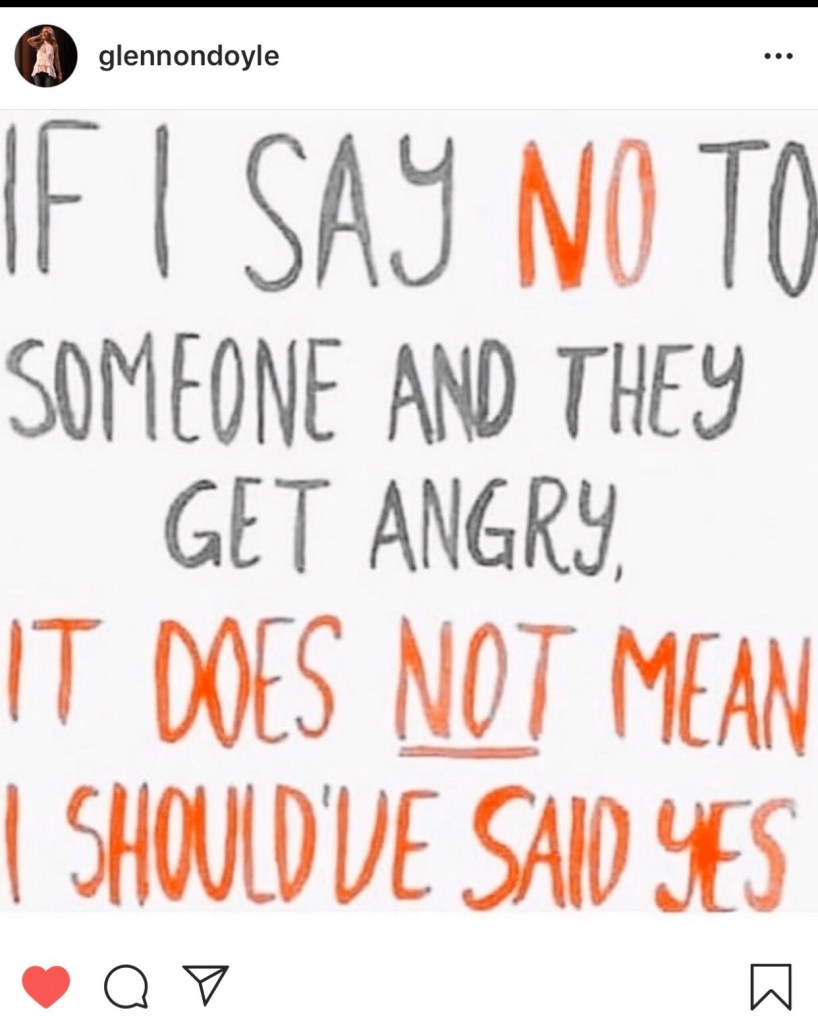
- Acknowledge the realities
- I find myself getting frustrated when I can’t keep things running seamlessly. Interruptions seem to plague a school day and I always aim to minimize them and keep all of my students engaged at every minute. I’ve let myself off the hook with this just this year. If the phone rings and I have to ask a student to head to the office because they’re leaving early for their neighbor’s sister’s gymnastics competition, the learning of the rest of the class is interrupted. But that’s not my fault. I remind myself of that. I would have chosen to keep teaching and preserving the energy flow.
- I am not the reason for the interruptions.
- I am not the reason there are so many children in my class.
- I am not the reason public education funding is abysmal.
- Enforce boundaries unapologetically
- Some people won’t like this—especially people who benefit from you not making boundaries clear in the past and accommodating the daylights out of everyone but yourself. You’re not being a b$@&$. You’re establishing boundaries and teaching those around you how you deserve to be treated.
- When a parent emails me repeatedly after school is done and emails me again in the morning prior to the start of the school day, asking why I’m not responding, I politely remind said parent that I respond to emails during school hours. If there is an emergency, they are more than welcome to call the main office. This does not make me a bad teacher. This makes me feel like I have a clear delineation of work and home life.
- When a previous boss once raised his voice at me and aggressively slammed his hands on his desk, I stood up, pushed my chair back and replied, “No. I will not be spoken to like that in the place in which I work so hard. This conversation is done.” I will not tolerate disrespect in the very place I deposit so much good.
- When an email is received five minutes before the school day begins, requesting work for a student who’s going on a multi-week African safari, you have my permission to say, “I hope your family has a wonderful time on the African safari. We will keep a folder of missed work for your child and she is more than welcome to complete it upon return.”
- A morning treat
- Make this whatever you need to make it to give yourself a little reward for beginning another day by giving everyone a clean slate. What other career requires its employees to give all clients 180 new daily chances? My friend, Sarah, gets a car wash every morning to kick off the day and parks her shiny black Yukon in the parking lot like a boss. I like an iced coffee and a chocolate breakfast bar which I pretend is a Snickers. Queue up a good podcast that makes you laugh. Say a prayer for your own sanity. Call your college roommate on your commute. Do something for yourself before you begin to give so selflessly to others.
- A slow start
- So often, I feel like I need to jump into the day at full speed and utilize every single minute. On days where I feel anxious and rushed, I try to breathe and tell myself, “No one will be less educated if I take three minutes to get myself together. Organize the piles on your desk, Sarah. You’re not responsible for an hour-long dog and pony show.” Last week, I went to the dentist, and I waited for eight-ish minutes before he came out to greet me. He didn’t have a sensory bin or a word search on my desk to entertain me from the minute I entered the place. And I survived.
- A friend or ten
- This is perhaps one of the most essential teacher self-care pieces. You’ve got to have people in your court who are rooting for you and who will look at you in the hallway and lock eyes with you as if to say, “I see you. We’re both going to heaven one day for this. It’s going to be so fun up there.” And the copy machines in heaven will never jam. And Mary will never send us an email which reads, “My son, Jesus, says you don’t like him.” And there are definitely no Halloween parties in Heaven.
- If you’re not fortunate enough to have a friend or handful of friends in your building, be sure to know who your cheerleaders are and have regular contact with them. Who do you know who will raise you up on a hard day when you text them and say, “Today is so much?” My friend, Marcia, will text me sporadically throughout the school year and say, “You’re such a good teacher. Go easy on yourself today.”
- Permission to “take five”
- Most secondary teachers have a five minute break in between classes to use the restroom and prep for the next class. Elementary teachers do not have this luxury. So sometimes, I give myself a five minute-isolated break. I’ll tell my students that we’re all on a five minute hiatus. They are allowed to sit at their desk and chat with others, use the restroom, eat their snack, get a drink of water, etc., but unless there’s an emergency, they need to give me five minutes so I can recharge. This literally means me saying, “Please do not come up to me for the next five minutes. I have to recharge.”
- Again. You’re not being mean. You’re being human.
- There are kids in my class every year who will come up to me multiple times every hour if I don’t ask them to give me said five minutes. I have to be honest with them so I can be true to myself. One can only hear so many stories about someone’s grandma’s dog or field the ever-popular “I never got one of those,” response.
- Acknowledge your emotions
- I’m not a denim-jumper-wooden-apple-pin-wearing-fake-smiling-robot. If a class makes me feel disrespected or upset, I let them know that. This year, after a particularly challenging group made class so difficult, I sat them down the following day and calmly told them that. I wouldn’t begin the next lesson until I knew that they understood that their behavior made me, as a fellow human being, upset. Students have to be held accountable for their actions. You’re going to make the collective choice to use behavior which negatively impacts the group vibe? Then you’re going to hear from me that it’s not going to fly again in the room where my name is on the door, where I’m making so many deposits of goodness.
- Shut the door
- Shut the door and do what you know you need to do. If today you need to teach the social studies lesson without doing the 13 Colonies Mamba and everyone just makes flash cards of the colonies and simply memorizes them, your students are still going to follow the same trajectory already set out for them. No one’s Harvard acceptance letter is on the line. If you need to preserve your own sanity because you’re managing an event where 35 people show up for snacks, learning, social management, counseling, life coaching, etc. it’s okay. Not every lesson has to include bells and whistles and a fractions parade. Sometimes it’s perfectly fine to say, “Folks. This is the top number. It’s the numerator. The number below it is the denominator.” You don’t need to dress like a fraction and march around with your appendages labeled with numbers. You’re a human being, too, for God’s sake. Social media has set some kind of wacky standard that now, in addition to everything else we’re doing all day, we’re supposed to have some sort of costumes trunk in the back of the room to switch in and out of outfits as we motivate everyone to pick up a pencil. I’m not swinging from a trapeze to promote literacy. I promote literacy by sharing interesting books. I’m not a circus performer. I’ll be wearing my Old Navy leggings and a trendy sweater, not some kind of shiny superteacher cape.
- Share your passion
- If you really love something, share it with your students. Don’t worry whether it’s in the Common Core. Your passion is worth more than a standard set by someone who’s never set foot in a classroom. Use ten minutes to give everyone, including yourself, a break from the high demands under which we all work. Make the toothpick dinosaur.
- My friend, Kristen, shared her ukulele with her students, and, lo and behold, ukulele playing became the hot commodity in her class. And God bless the ukulele. Kids aren’t fakes. They can sniff out genuine behavior from the minute they enter your classroom.
- I love to read, so I do book talks in my class on the regular. I show them books I read, even if the book is far above their reading level. You know why? I like them to see that I’m more than just a robot. I like them to see me passionate about something. It gives me more credibility with them and allows them to see me as a human being as opposed to some kind of crazed Stepford teacher.
- Speak your truth
- I feel like there’s this pressure to pretend that every day is the best day ever and we’re never supposed to say anything not laced with positivity and dripping in sunshine simply because “it’s for the kids.” You’re not complaining if you say something less than sunshiny once in awhile. I’m completely fine with a nostril flare or an eye roll from time to time. We’re human.
- When we leave on a field trip with lines and lines of children behind us, it never fails. Multiple people in the hallway will smile and say, “Have so much fun!” I truly couldn’t put my head on my pillow at night if I played along. I have to be true to my DNA and my own soul and retort with something like, “I’m sure it’ll feel just like my first trip to Aruba, lying poolside with Mark.” Folks. Really? Have fun? Get real. Let’s instead make it a priority to say something like, “I hope you have a good day, Sarah.” That’s more realistic. Heading to a museum with 140 children on school buses isn’t synonymous with “fun.”

Saving, Fixing, and Changing
You can save. You can save yourself from the unrealistic demands which accompany this career by constantly putting your own mental stability at the top of your priority list.
You can fix. You can fix things throughout the day which don’t work for you and make them serve you better. I’m not blind to the fact that so much is out of our control. But the things within our realm of control are the things I’m advising you to make work for you.
You can change. You can change the narrative. You can change the way people treat you. You can change your approach and remind yourself that you, too, are a human being and you, too, matter.


I love you, Sarah! For your passion, your voice, and the willingness to share your truth… which might give courage to another to share theirs.
You’ve bloomed and grown into such a wonderful humanoid!
In reading this & your earlier blogs, I’d venture that you do John & Clara, Doug & MaryEllen proud. But more importantly, you’ve arrived at a place where you do you proud.
LikeLiked by 1 person
Sarah Meyer, you are an inspiration to so many! You made a difference in my daughter, Madison’s life and for that, I will be eternally grateful. We still talk about you….4 years later. You are genuine, compassionate, supportive, and truly, have a heart of gold! Miss you! ❤️
I love that a teacher in my district (DPSCD) shared this on our FB page. You make a difference every day!!
LikeLike