The Third Trimester Game Plan

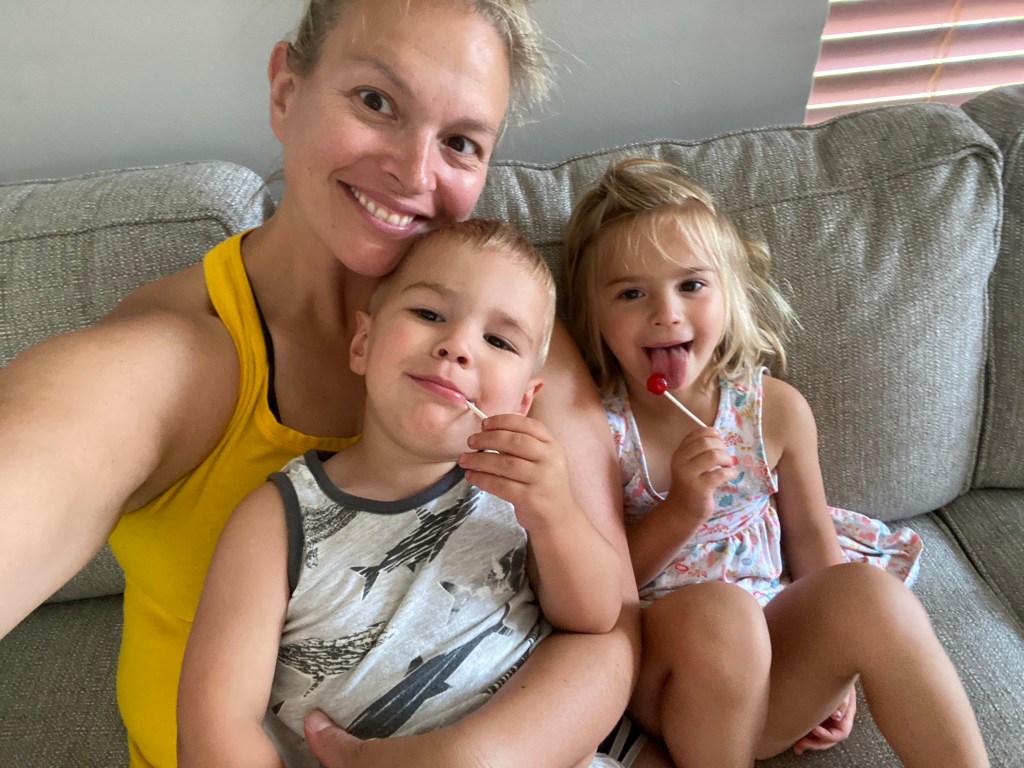
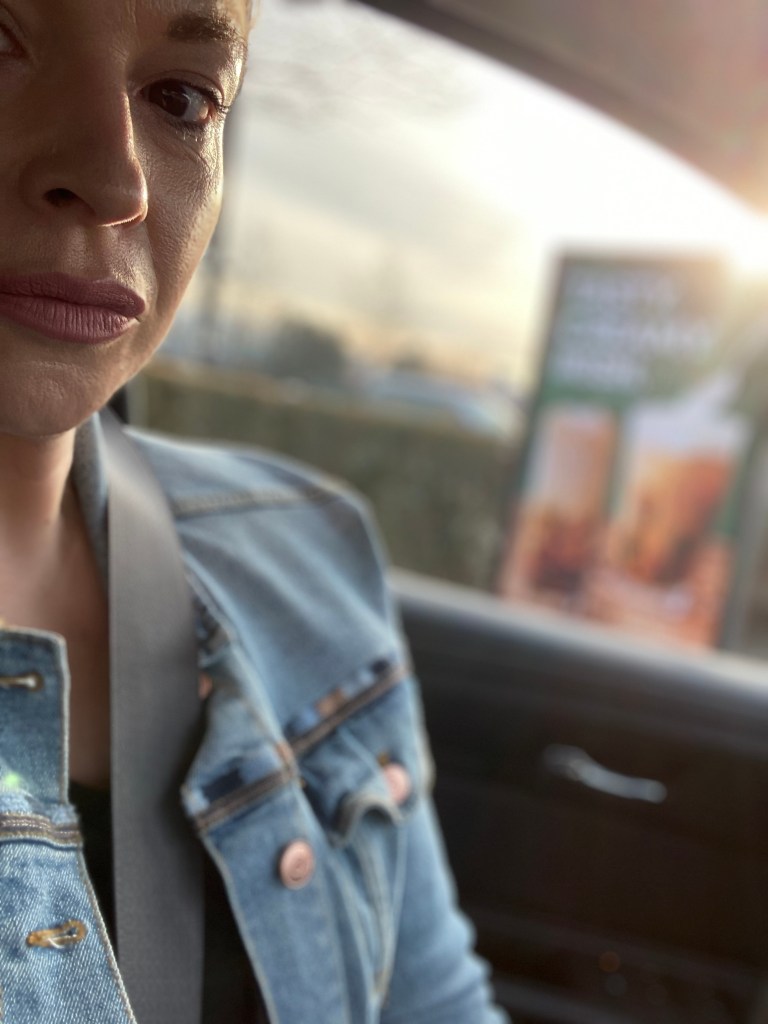
This is me in the Tim Horton’s drive thru, texting my best friend, Sarah, that I’m coming in hot with our lattes so we can caffeinate ourselves enough to teach measurement conversion.

Wednesday night, I took Maeve and her cousin to dance and, at 8:00, after twenty minutes of being home, I took my pillow into the guest room, ignored everyone, and cried myself to sleep.

I had had enough that day.

Enough begging children to listen to me.

Enough emails about what more needs to be done by me, what form I need to fill out, what morning meeting I need to wake my own children up early to attend.

Enough of the phone ringing constantly, interrupting lessons, interrupting me, interrupting the learning environment I naively try my damnedest to create every day.

Enough exerting all of my energy to engage 33 students in every lesson every day whilst simultaneously ensuring that everyone is making growth.

This is a year like no other.

Teachers are flat exhausted and the thought of another trimester to go is paralyzing.

The children in our schools are in need of so much more than we can give them by ourselves.

And, I care about the students. I always have. But I care most right now about the teachers. Because without teachers, the students will have no one to lead them.

Honestly? The teachers I know are so tired that they don’t even have enough energy left to advocate for change.

Here’s What We’re Doing and Not Doing…..

1. We’re Going Outside More

I teach in Michigan. The kids are kept inside for recess if the “feels like” temperature is lower than 11 degrees, which has been, like, all but four of the days in January and February.

Indoor recess in a small classroom in the middle of a pandemic with thirty-plus tween bodies is a cluster. It’s fifteen minutes of the poor noon-aide in charge silently reciting The Lord’s Prayer that the clock moves quickly and the teacher chokes down her salad and gets her ass back in the classroom to regain normalcy.

This week, we went outside on a day the Sun was shining and it was life-giving. My students were playing tag and football and kickball and smiling and screaming and chasing each other.

They’ve made friends with other students they didn’t know at the beginning of the year and they have nicknames for each other and inside jokes which make them feel connected.

I walked the playground, jammed my hands in my coat pockets and thought to myself, “They are babies. They didn’t even get to finish third grade. They missed months with other kids. There is no lesson that can replace this. I don’t give a shit what’s on the lesson plan right now. We’re playing outside.”

I spoke with a parent on the phone last week who told me, “Mrs. Meyer? My son told me he has friends for the first time at school. He never felt like he fit in and now he has friends in the class and he says he loves going to school.”

This child was playing tag the other day with a smile on his face while his friends screamed his nickname and ran from him, giggling.

We’re taking them outside more.

They’re kids.

They’ve spent months inside apartment buildings, trailer parks, living rooms and crowded classrooms. They need to play and Jesus knows we all need the blessed Vitamin D.

2. We’re Saying “No” To Extras

My sister is a teacher in a neighboring district and was telling me that her PTC suggested they (the teachers) throw the graduating elementary class a glow dance, decorate their yards with special lawn signs, and some other thing that would be done outside of contractual hours. (Glowing is all the rage in elementary schools right now. Apparently, unbeknownst to me, adding glow sticks to things makes them better.)

Another teacher I know was telling me parents wanted their elementary-school-aged children to go to an overnight camp. Like, an overnight camp which the teachers take them to.

People.

Let’s get serious here.

Friday morning, one of my students walked in the room at 8:50 sporting a mustache drawn on his face with marker.

Some folks in my class are still struggling with the concept of “Take a paper and hand it back.” I’ll put six copies of a worksheet on the person’s desk in the front of the row and that person will sit and hold on to the whole pile. At one point, I even modeled how to take a paper for oneself, pivot one’s body, smile, and hand the remaining stack to the person behind.

No can do. It’s March and people are still playing, “I didn’t get one.” And then I have to say, “Lily, can you please not use all six papers? Remember how we take one and pass it back?”

So, I’m completely confident in my decision to say “nope” to having glow dances, camping trips, and lavish get-togethers now that we’re entering the third year of a pandemic. And the liability of all of that? Negative.

This opinion doesn’t win me a lot of friends. And I’m okay with that. I get it. Parents want their kids to have fun. But here’s the thing. I physically have no energy left to invest in the extras right now. Maybe one day when schools are funded properly and the mental health crisis is appropriately addressed and schools aren’t the only fixtures in the community raising these kids, we can add back in some of the extras. But for now?

No.

It has nothing to do with me being a b$$$$ or not liking kids. It has everything to do with me knowing my energy is finite and it is gone by dismissal.

Me saying “no” to the extras is me saying “yes” to myself, my own children, my family, and my well-being.

Me saying “no” to the glow dance is me saying “yes” to showing up on Monday morning with the composure and ability to lead us all through another day.

Please let me give you permission to let the guilt go.

The community needs to take very seriously that they also have a responsibility to their children. Teachers cannot raise these children without help from everyone around them.

You are not a bad teacher if, this year, you say no to a tradition which seems overwhelming to you.

You’re an empowered and educated human being.

Please, families, have a glow dance at your own place for everyone. Take the neighborhood kids camping. Oh? The thought of coordinating a camping trip for the whole neighborhood seems exhausting and overwhelming?

I hear you.

3. We’re Not Accepting Blame For Things We Can’t Control

My kids and I took turns contracting every illness possible in January and February. We had Covid, the flu, pinkeye, coughs, colds, ear infections, and Mark even had a tooth pulled for good measure. It got to the point where I was doling out meds and setting up diffusers with eucalyptus oils like an official colonial apothecary.

My husband and I always divide and conquer days where we have to stay home with sick kids, but even then, I felt a twinge of guilt start to rise to the surface because I was receiving sub reports that my class was less than perfect, to say the least.

Thankfully, I’ve had enough therapy and listened to enough self-empowerment podcasts to have checked myself.

It is not my fault if a roomful of ten year olds who are not my biological— or adopted—children, for that matter, misbehave for another adult individual who I may or may not know but most definitely do not have control of.

Release that.

Your students are not a direct reflection of you.

That’s gaslighting.

It’s a way to place blame on the wrong person.

Pretty sure if I would have run my mouth to the sub, Mr. Richard, sophomore year Spanish in Ms. McCarron’s class, it wouldn’t have been a reflection on her.

It would have been a damn direct reflection of me.

Mary Ellen gave me one warning in that class.

If she got another call that I was being disrespectful, I’d have to find another place to live.

Drastic, obviously, but I got the message.

I was the kid.

It didn’t matter if I was bored with a review worksheet or I had a bad morning. It was made clear to me that the adults in charge deserved to be treated respectfully.

Let’s hold the correct individuals accountable here.

We’ve swung so drastically to the other side of the accountability pendulum that the only people being held accountable are the teachers. Let’s hold the other key players accountable as well.

4. Schedule Routine Maintenance

If your dentist tells you you’re due for an appointment in March, schedule an appointment in March. No more waiting for the next break or just bypassing all doctor’s appointments until summer.

Mammograms, mental health sessions, eye exams, teeth cleanings, chiropractor visits because you’ve lost feeling in your arm?

Schedule them and take a day to take care of yourself.

This is truly revolting, but I’ve been dealing with warts on my hands for the last nine months. The dermatologist’s office is open 8-3. So, cheers. The warts are literally taking over my hands. I have to get them treated and I don’t have a flexible scheduling option as part of my benefits package, so I have to take off to get them treated. I refuse to compromise my own health.

You’re worth it.

Ignoring your own needs “for the kids” isn’t helping anyone (including the kids) except the people who want the whole teacher-martyr complex to continue.

Share this with another teacher. Check in with that teacher this week. Remind her or him that s/he’s not alone in this.

Go outside this week.

Say no to something that is sending you over the edge.

And, by God, do not accept responsibility for things that are out of your control.
80’s Elementary Schools and Burnout

I attended Tenniswood Elementary School in the late 80’s and early 90’s.

The school smelled like those soft cafeteria chocolate chip cookies and musty yellow sponges that we used to clean the chalkboard at the end of the day. We took field trips to the Macomb Center for the Performing Arts to see fairy tale plays which I believed to be Broadway equivalents and we practiced multiplication facts in the hallway with Mrs. Hughes for Jolly Ranchers.

In fact, Mrs. Hughes, Phillip Hughes’ mom, dressed like a witch for our third grade Halloween party and had a cauldron with dry ice that we got to fish Halloween treats out of. I clearly recall high-fiving each other and proclaiming it to be the best day of our lives.

Some of the Tenniswood moms had a program called, “Picture Lady,” where they’d present artwork of a famous artist in classrooms each month.

Picture Lady was fantastic AF.

I remember watching a mom prop Van Gogh’s Starry Night up on an easel while she told us all about his life, thinking to myself, “Things to do. 1. Become a Picture Lady when I get older.”

In first grade, my teacher, Mrs. Watts, would stand at the front of the room and we’d switch sentence strips out on the calendar wall to help everyone learn days of the week and time.

“Today is Tuesday,” we’d read together. “Tomorrow will be Wednesday. Yesterday was Monday.”

I used to sit in my seat and roll my eyes impatiently when other students were called upon and didn’t know the answer. “Like, come on, Man. Tomorrow will obviously be Wednesday. Let’s get this shit done so we can get the filmstrip machine cranked up. “

I can vividly picture Mrs. Watts propping the filmstrip machine up on textbooks, and hitting “play” on the accompanying soundtrack tape player.

Once, we watched a filmstrip called “The Red Balloon.” I remember watching her turn the knob on the filmstrip projector as the red balloon floated away, thinking to myself, “Oh, I WILL be the boss in charge of the filmstrips one day.”

Tenniswood Elementary circa 1987 was nothing short of magical for me.

I loved school. I always wanted to be there. I knew that, by becoming a teacher, I could always be a permanent fixture on the school scene.

Jumping tires on the playground, singing songs at the piano in kindergarten, crafting turkeys out of pinecones for Thanksgiving….It gave me the gift of an innocent childhood.

And now, that innocent magic seems to be gone.

Now and Then

In 1987, there were no school shootings.

There was no pandemic.

There were no cell phones.

There was no social media.

Parents weren’t regularly screaming at Mr. Carkenord, the principal for whom the school at which I now worked is named.

I doubt more than half the staff was on Lexapro just to make it through the school days.

Kids weren’t running from the building and assaulting staff members regularly.

Trauma didn’t seem to be infiltrating every corner of the school.

I don’t feel that Tenniswood magic at school anymore.

Now, when I’m at school, my mind races and my hands often shake and my body feels heavy. There is so much to manage that my poor brain and body can’t keep up.

I think often about the teachers who taught me, how they never had to practice lockdown drills, how they didn’t have to worry about teaching virtually and in person, how they could call home without worrying that a parent would accuse them of being unfair.

The trauma our American children are carrying with them to their elementary schools each day is crippling them.

And, as a result, it’s crippling the people who are trying their damnedest to help them.

So many of my students will never remember their school as the place which smelled like chocolate chip cookies (and, in fairness, it doesn’t.) because they’re so dysregulated from the trauma they carry.

Some of my students will simply remember their elementary school as the only place they ever felt safe.

And now, in lieu of a school shooting which happened only 40 minutes from the school in which I work, even that certainty is being compromised.

You Can’t Shake Secondhand Trauma Off In a Day

The wind was blowing so loudly last week that some of my students looked at me, panicked, because the ceiling tiles shook and the noises were frightening. I assured everyone it was just the wind, that they’ll always be safe with me.

But silently, I prayed, “Jesus, please. Please keep me safe here so I can always come home to my own babies.”

I had a meeting for a student the other day and, after the parent signed off, I asked the social worker and special Ed teacher to stay on with me. I started crying and said, “Please tell me, how, after hearing what’s going on in her life, we can even care if she knows how to write with transition words? Screw transition words. Her life is not fair. I need someone to say that out loud with me. This poor, poor girl.”

One of my students carries such trauma that his posture and coloring is affected and he hides under his desk when he feels dysregulated. The other day, he refused to take his coat off and hid under his desk. So I did what I knew to do as a human being. I sat down on the floor next to him and whispered to him while I gently placed my hand on his back.

“You are not alone, Buddy. It’s me, Mrs. Meyer. I’m here with you. Today will be a good day. I’ll always keep you safe. Everything will be okay today.”

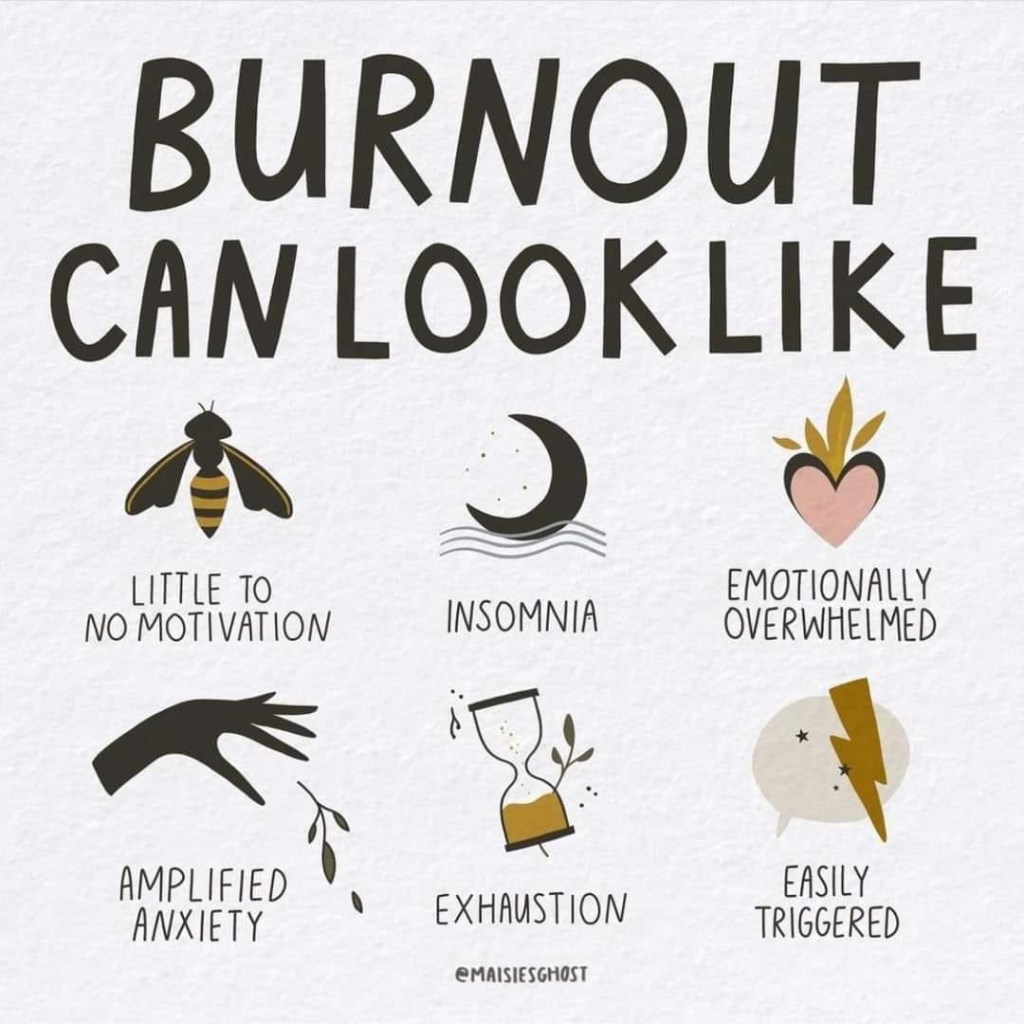
But teachers like me can only handle so many of these situations before we burn out.

Burnout

I do the same exact thing for every school break. I trick my mind and body into working in survival mode at school and then, once break comes, I can’t function.

I have these visions that I’ll be making four million Christmas cookies and hand-stringing popcorn for tree garland and then I’m paralyzed by exhaustion and ordering takeout for every meal.

Saturday and Sunday, I was just nasty.

Saturday night, Maeve threw up on the kitchen floor after a coughing fit and too many Christmas cookies and rage circulated through my bones because Mark used paper towel to clean it up and then went to the bathroom with his phone.

After I showered Maeve and tucked her in bed, I walked downstairs to the smell of vomit and cursed everything.

I filled a bucket with lemon Pine Sol and simultaneously scrubbed and sobbed.

I cried for students with trauma, for all of us carrying the sadness of the Oxford community, for the loss of innocent childhoods, for the pandemic and how much its taken from us, for the heaviness of this current time.

I cried because I am so, so tired of witnessing this country fail its children.

Tenniswood Bedtime Meditations

When I fell asleep Saturday night, I closed my eyes and thought about Picture Lady, cafeteria chocolate chip cookies, The Red Balloon filmstrip, and the piano Mrs. Puggini played while we all sang, “Here Comes Suzy Snowflake.”

Because those things will always bring me back to the innocence and magic lost in today’s world.

This Is How We’re Going To Do This School Year

I’m writing this as a full-time working mom of a four year old and two year old. I currently teach elementary school in a nearby district and will be responsible for a preschool drop off and then a daycare drop off prior to arriving at school each day. I think it’s important to acknowledge that each individuals situation is different and my ideas may not all work for you. Take what works for you. My intention is to create community amongst teachers, moms, and women during this difficult time.

A fellow teacher sent this to me this morning and I’ve got to make sure someone talks to teachers about something other than curriculum prior to our return. We’re not going to run ourselves ragged for the next nine months.

We’ll Make This A Series

I started prewriting for this blog post and realized that there are so many things I’ve learned that I want to share, so I’ll write this in parts because afternoon toddler naps and Peppa Pig episodes will keep my crew occupied for about two hours tops if I’m lucky.

Already laughing thinking about how I will need all the Jesus I can get to get these two dropped off in the morning prior to arriving to 35 fifth graders.

1. Zoom Out

I’m exceptionally forthcoming with the fact that I’ve seen a therapist for the last fifteen plus years. I wholeheartedly believe that therapy is so beneficial, especially to those of us serving others all day.

Once, when I was sitting in a plush velvet chair in my therapist’s office, crying about how I just wasn’t a good enough teacher, she said, “Sarah? Who designated you to be the savior of Chesterfield Township?”

ME. I did. Because, for the first part of my life, I drank all the Kool-Aid society and my mother and the families and school administration served me and I kept trying to give and give and give. I was trying to be a social worker, teacher, counselor, therapist, mother, and so many other things to children who are not mine to save.

You are not the savior of your new class.

You are not the first or last person who will ever teach them something. So take that pressure off yourself.

Society will tell you you are. You will see memes which tell you that all children need one person to believe in them and stories of teachers who taught in driveways during the pandemic and have parents who send emails at eleven p.m. looking for immediate responses.

Zoom out.

Instead of starting September feeling like you’re going to puke, thinking, “I have to get everyone to grade level,” or “I have to make sure all thirty five of my students are engaged during every minute of the day,” or “Every lesson I teach has to be aligned with five standards,” think, “Simply by arriving in this classroom today and providing my students with a safe space to learn and be, I am giving these children a great gift. They are witnessing a responsible, compassionate adult who values education. And most adults can barely manage a handful of children, let alone a classroom-full.”

That is the top objective. Every day.

Of course, it’s important we deliver the curriculum, but for most teachers I know, that’s not the difficult part. It’s managing everything else that we never could have imagined sitting in our educational psychology classes in college.

So, for the next ten months, when you feel the anxiety creeping in when red-flagged emails pour in, you say to yourself, “I am here. I am showing up for them. I am giving to them.”

Think back to your own teachers and if they’re singlehandedly responsible for the individual you are at forty.

Pretty sure Mrs. Yizze (my fifth grade teacher) wasn’t spending weeks planning our Halloween party.

I don’t fault Mrs. McAtee, my third grade teacher, for not teaching me enough about the conflict in Afghanistan. She taught me how to do long division, rocked out some reading groups, and her son came to perform magic shows. Job well-done. I’ve been reading about Afghanistan on my own.

Mr. Nye, my fourth grade teacher, had a list on the board where we had to write our own name if we were “being bad.” We scribbled on dry-erase maps all day and I daydreamed about my wedding to Stephen Duncan. I’d put money on the fact that Al Nye wasn’t losing sleep at night worrying about me passing the MEAP test.

My point is this.

You are a small part of the collective influence on all your students. It is not up to you to save them from everything they’ve experienced prior to knowing you and everything they’ll experience after leaving you in June. You are giving them a great gift simply by welcoming them each day and inviting them to learn with you.

2. You’ll Lose At The Comparison Game Every Time

This is especially important if you are a new(er) teacher.

Whenever you start comparing yourself to other teachers, stop. Go back to the first item and remind yourself that you’re showing up and you’re giving your class a classroom community in which to learn.

I play this nasty comparison game with myself all the time.

At my school, Liz, who teaches second grade, is such a trendy dresser. She always has super cute shoes and outfits and is funny, to boot. Sarah, my teaching partner and Carkenord soulmate, is a champion multitasker. She can have her entire class working while she rewires her computer and folds report cards. Kristen Black made my lesson plan template in five minutes, Angie has beautiful anchor charts, Jen’s classroom always smells like apples and is so clean and Sarah D. sings songs to her students when they transition activities. Melissa is always the first person to help in an emergency and Amy Q. has the most organized computer files I’ve ever seen. I once asked her about a student she had two years prior and she did a rhythmic click-click and accessed some kind of unicorn file on him.

After nearly twenty years in the classroom, I’ve fully embraced the fact that I am not a Type A teacher. And that’s perfectly fine. It’s not a job requirement.

This is my not-so-trendy shirt from Kohl’s. I can’t multitask like Sarah can because my brain doesn’t work like that. I don’t like making anchor charts, I simply say, “You have a three minute chit-chat and bathroom break and then we’re going to start some math, Team,” and my room more often smells like fifth grade boys than apples. I don’t have organized computer files on my students, but I can tell you their parents’ names, middle names, birthday month, hobbies, prior teachers, prior schools, favorite subjects, etc. When Melissa sends an email about helping a staff member in crisis, I always send a student down with cash and tell her “Thank you for always stepping up.”

My point is this: Stop trying to compete in every event. I’m a really great reader and writer. I’m a shit organizer. I’m really great at public speaking. I make shit bulletin boards. And that’s okay. We all bring different things to the table. Do not expect yourself to be blowing all things school out of the water. If you know you struggle with technology, find a technology buddy and tell her that you’re cool with being the copy person.

Just stop comparing yourself to the gold medalists in every teacher event. You can’t be the gold medal science lesson teacher, the gold medal Daily Five medalist, and the most fashionable person in the joint.

Identify your strengths and remind yourself you’re the gold medalist of those.

3. Your Classroom Doesn’t Need to Look Like Starbucks

Here is what.

If you find joy in decorating your classroom, rock it out.

By all means. Decorate the daylights out of it.

Have a reading bathtub and let your students read in the damn thing. I truly don’t care.

But if you’re like me, and you start sweating when you think of hanging things on that God-forsaken white cinderblock and coordinating door decorating every holiday, DON’T. Do this within reason. Put up some things that speak to you and move on.

Back before we had kids and we thought it was romantic to set up my classroom together. Bahahaha.

Your classroom does not have to feature hundreds of dollars worth of thematic posters and a pantone color palette.

(I acknowledge that teachers in lower elementary and preschool grades rely heavily upon things in their classroom for teaching purposes. But for the rest of us, hanging a million purple pom poms from your ceiling doesn’t make you a more invested teacher. Spend the time doing something you’d enjoy.)

Your value as a teacher is not related to how “cute” your room is.

And, also. If you truly enjoy having a beautifully decorated classroom, don’t put the insane expectation on yourself to have it all ready for the first day of school. Give yourself time to get settled. You don’t necessarily need beautiful character education posters wallpapering your room on Day 1. Put them up on a day when you’re in the mood to.

I hope these three reminders serve you, even in just a small way.

I’ll be posting more this week. Enjoy your summer Sunday night if you’re still on summer vacation and if you’re heading in to work tomorrow, remind yourself that you’re not the savior of the classroom and you’re a human being too.

We’re Almost To The Finish Line

I told my life partner, Sarah, today that I feel like I think like a writer. Sometimes when I’m thinking, I actually can see how I would write about and format the feelings I’m experiencing on the page. I was referencing how I’d communicate something that had happened at work, and, by the end of the day, the only thing I knew to do to diffuse some of this end-of the-school year energy is write a blog post.

Also. I feel as if full disclosure is exceptionally important at this juncture.

Full Disclosure

So, full disclosure.

1. It’s 5:30 p.m. Miss Allie, an angelic teenager from our neighborhood, is here, playing with my children in the basement while I eat oatmeal alone and type this blog on my phone. Now, this is simply because I need a buffer between being teacher and mom at least once a week.

That is correct. I am a privileged suburban Costco mom who is completely comfortable saying that I need help. (Almost completely comfortable anyway.)

2. My wardrobe is laughable and sponsored by Amazon, even though I despise supporting Jeff Bezos. My fifth grade teacher, Mary Louise Yizze, wore business suits and high heels and a beautiful gold necklace each day. Today’s getup is a tank top which reads “Good Vibes,” a pair of black leggings, and this new ponytail I’m trying out to see if ponytails are back in. If Mary Louise saw half the tomfoolery going on in today’s public schools, she’d be asking me for the link to my leggings.

I mean, this should clearly be my LinkedIn headshot. I can’t even take this ponytail seriously.

3. The house that we bought in August is coming along but only has a decorated mantle because my youngest sister finally said, “Alright, this is getting ridiculous now. I’m all for you bringing down the patriarchy, but we all have to look at this eyesore.”

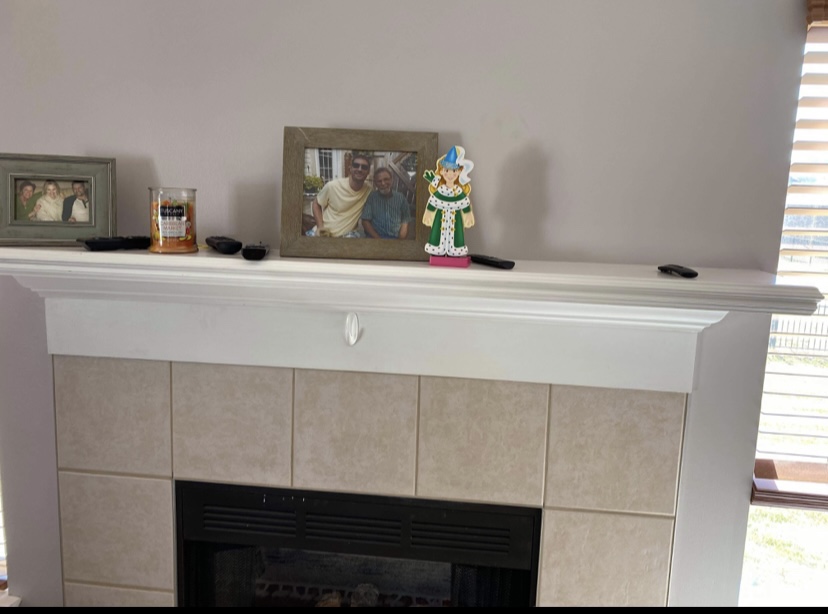
This was our mantle from January until about May. A picture of Mark and his Uncle George from seven years ago is front and center, flanked by a magnetic doll dressed in a princess hat and five different remotes.

Please allow me to show you other displays since our big move, two weeks before I returned to teaching face to face in a pandemic in September of 2020.

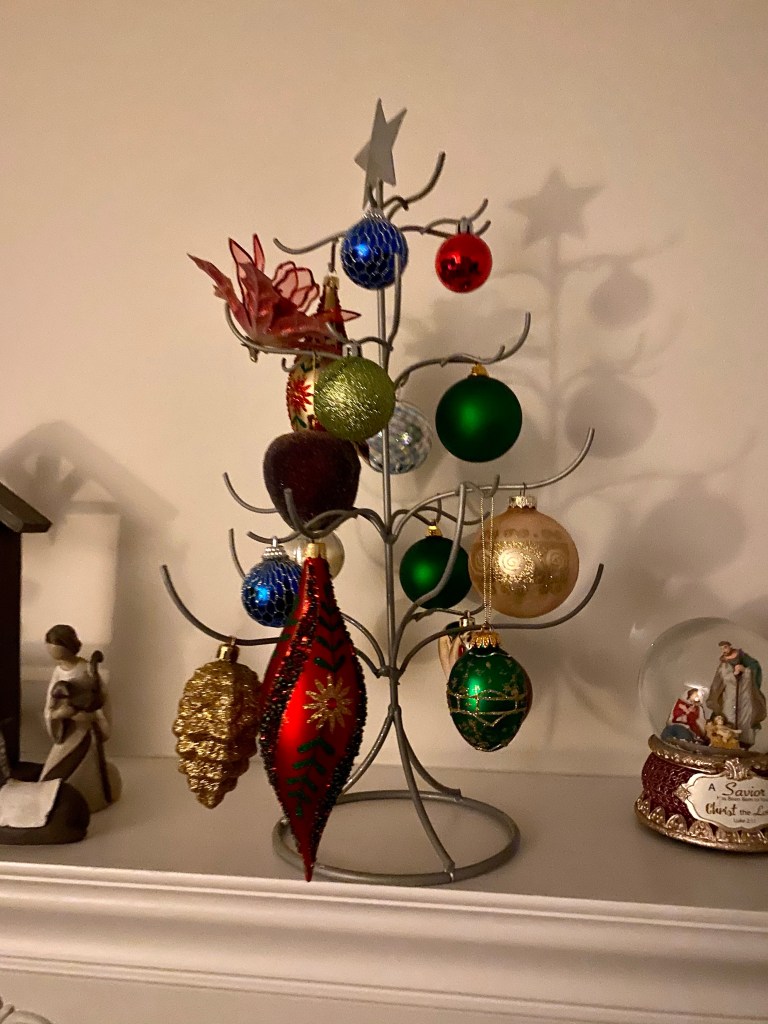
Mark decorated this tree in our bedroom for Christmas. Doesn’t it look super Pottery Barn inspired?

The Blessed Last Day

My district will be in session until June 17th.

Bless me for using this microphone like a boss every day.

June 17th.

More than half of June.

People.

Goodbye.

Best wishes for a lovely summer.

Being a teacher in a pandemic was super fun.

I loved every minute of it and I’m so blessed to know you all.

Experiencing this pandemic with all of you and hand washing so much that I now have warts all over my hands from the dryness and cuts and teaching with masks on and pretending we’re social distancing has been a rockin’ time.

Enough.

Every morning since the return from Memorial Day break, I wake up like a big ninny, head to my basement to drink the Peloton Kool Aid and tell myself working out daily will help me stay calm, and then play “full time working teacher mom” for 30 minutes before I haul my crew to Ms. Suzi’s.

At 7:30 a.m., I read “My Tool Book,” to Maverick three times and remarked, “Babe! You have a hammer? You put your hammer in your toolbox? Wow, Bub! You’re a big tool guy.”

Not even an hour later, I watched a gaggle of fifth graders saw into their bagels with plastic knives, spreading cream cheese on them as if they were attending some surf and turf event only to raise their hands after I explained an assignment and remark, “Do we have to do this?”

My diligence is admirable.

Each morning, I give it another go. Just like so many of my colleagues. Colleagues who work in the same hallway as me and colleagues who work in different countries than me.

We have raised up the children of this world.

We gave them back something that was familiar to them when so much of their familiar had disappeared.

I am so damn proud of us for this year.

This is not to say teachers are the only ones who did a bang up job this year. Many people did a bang up job this year. Nurses and sanitation workers and moms and dads and child care providers and infection prevention specialists (get it, Cousin!) and bus drivers and therapists have shown up and lifted people up. So many people will be able to look back at this pandemic and say, “I helped. I made a difference.”

But today’s blog post is for my fellow teachers and I.

Because we need someone to raise us up like we raise others and say, “We see that you did something scary and difficult with roomfuls of people who can’t keep masks on, who can’t social distance, who have so much unprocessed and unresolved trauma from the past and present and you gave them somewhere to go.”

We did it.

I’m raising us up.

I’m telling us that we did wonderfully during one of the hardest years of our careers.

I’m telling us to eat that chocolate at the bottom of our desk drawers and sit back for a day while they color for fifteen minutes.

And because we’ve given of ourselves, often at the expense of so many other people and things, it’s time to hand over the torch for the summer and take a well-deserved break.

I Started This Blog Post a Month Ago And Never Finished It. Its Message Aligns With This One And It’s Almost Time To Bathe My Children. Piece Them Together and Enjoy.

There were ants on the living room windowsill today which climbed onto the sectional I’m still making payments on and have sat on a total of ten times since its January arrival.

I had to have a colonoscopy last week because I was drinking so much cold brew coffee that I essentially broke my own butt, Maeve has fourteen zillion cavities and her dentist looked at me like I’m giving her bottles of Mountain Dew at night and I sent Maverick to daycare on Monday last week in Maeve’s shoes and then on Tuesday in a pair of shoes that didn’t fit him. Also, unbeknownst to me, my car was leaking oil on Suzi’s driveway at pickup every day and she embarrassingly had to include a note in everyone’s cubbies which read “Leaky Vehicle.” Mark read the note and said, “Oh, that’s your car leaking the oil,” which, in turn, led to yet another lecture from me on taking care of tasks in an appropriate amount of time.

We have a raccoon in the attic of the home we’ve lived in for nine months and we had to write a man whose business card reads “Don The Pest Guy” a check for $250 this evening. Don is a lovely gentleman who climbed a ladder through racks of my sweaters to set a trap in the attic while I got Maeve dressed for dance.

I can’t even imagine what’s going through Suzi’s head at this point. I know my own internal dialogue would be something like, “She’s got time to write those damn blogs but her car is destroying my driveway and her kid is falling down the stairs because his feet are too wide for Natives.”

I got a new student last week with 22 days of school left, my class sat through hours and hours of standardized state testing that allegedly doesn’t even count after attending school during a pandemic and I banged on the classroom bathroom door yesterday and yelled to a student, “You need to get out here while I’m reviewing for this math test. I’m literally putting the actual test on the projector and you’re playing in the bathroom.”

While I’m dripping in sweat and simultaneously explaining story problems to ten year olds in bathrooms, my Boomer is texting me that her neighbor had cataract surgery and that she saved $171.50 at Kohl’s.

Conclusion Paragraph

I’m going to tie it all together like I teach the troops at my day job to do.

To all the teachers and moms and teacher moms out there—we did it. You did it. I did it.

We gave the children a great gift.

And the summer is ours to rest.

I’m Writing This Because I Need To Hear It Myself Today

Today’s post is an homage to moms.

Because, for crying out loud.

As if motherhood itself isn’t enough, this generation of gals is going to experience it amidst a global pandemic. While we work from home. With no childcare. And make organic meals with cauliflower crusts and refinance our homes and throw socially distant birthday parades with pretty sugar cookies and themes like, “Maverick is One-Derful.”

It’s like when I bought a condo before the economy collapsed in 2008 because my Boomer told me real estate never lost its value.

I ended up “short-saleing” said condo in 2011 for less than the worth of the car I parked under the complex’s rusted canopy. Soon after, I moved back in with my mom for three months to get my life together and laid in my childhood twin bed thinking, “What in the actual hell just happened? I did exactly as I was told. How did I end up here?”

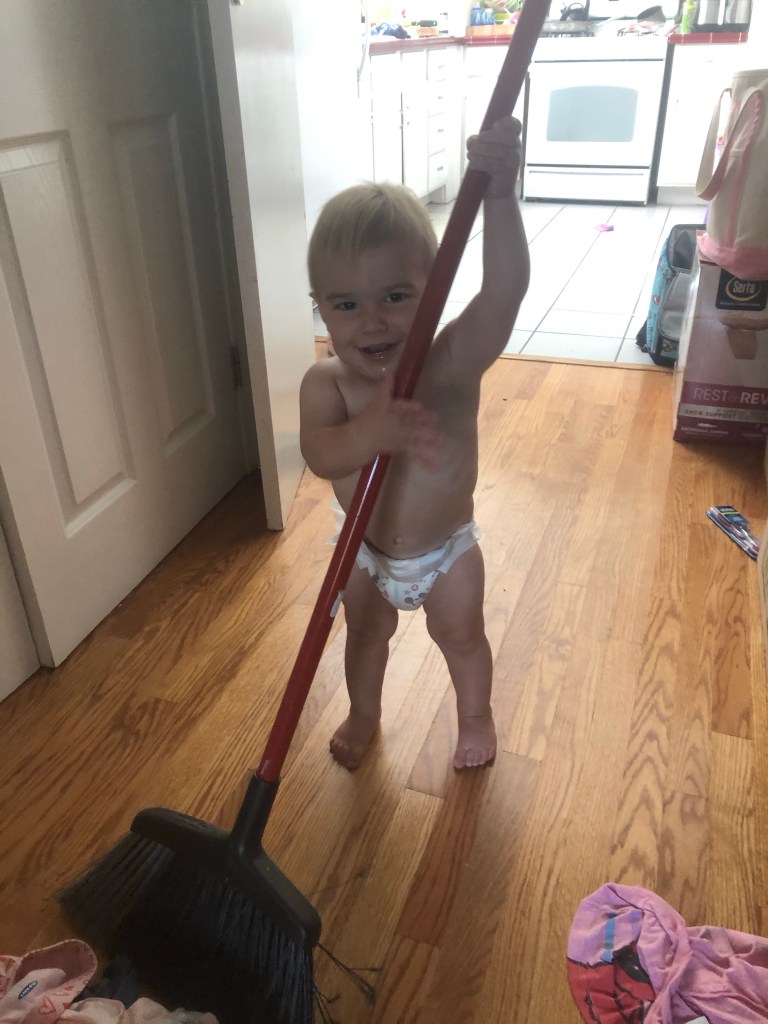
I never, in a million years, could have guessed that a pandemic would hit and I’d be serving every meal of the day in my kitchen to two people who somehow manage to deposit at least 50% of the meals to the floor and then demand Daniel Tiger before I even have a chance to fetch a broom.

Maverick, clean your own Cheerios up, Bro. This pandemic isn’t ending any time soon and I’m flat exhausted from my job as a park ranger. (See next paragraph.)

Parks, Libraries, and Ava

This is a piece that will not display my writing ability so much as my vulnerability as a woman and as a human being right now at this particular point on the timeline.

This is in no way written to say I have it the hardest.

I know I don’t.

I know there are essential worker moms and single moms and underresourced moms with plates twenty times fuller than mine.

But today, all I wanted was for someone to say, “Sarah. This all is a complete shitstorm and it’s so hard that everyone is in survival mode and anyone who says they’re not is lying.” I just needed someone to listen to me today and if I felt like that, I know some other moms must have felt the same way.

This one’s for you, Ladies.

Once COVID is behind us, if I never see another park again until the day I die, I truly will not care. I have been to the park so many times since it reopened back in June or whenever the hell month that was that I feel like I need to wear Joey Gladstone’s Ranger Joe park ranger uniform instead of leggings and athlesiure.

This is me, every morning, gearing up to profusely sweat my ass off at a local park while I chase Maverick around and beg him not to eat woodchips and push Maeve on the swings while she yells, “Push me higher, Mom.”

Each morning at the park, I recite the same lines from my Pandemic Momming script.

“Maverick. We don’t eat woodchips. That’s caca poo poo.”

He truly needs to be on MTV’s “True Life, I Eat Woodchips,” with those people who eat laundry detergent. Pictured above, the woodchips nicely adhere to his face with the help of expensive sunscreen I buy from Grove Collaborative to prove to myself I care about safe sunscreen.

“Maeve, we’re not eating snacks right now. Mom didn’t pack snacks.

“Sunscreen helps our skin stay nice and healthy and not get burned by the sun. Okay, let’s put some sunscreen on our best guy and best girl!”

Because what the hell else are you supposed to do with a one year old and a three year old when there’s a global pandemic going on and you can’t go anywhere? After about a half hour in the living room, people start getting real salty.

Go for an hour long walk?

Did that in March and April. They’re not allowing me to lure them to the stroller with enticing garbage treats like Slim Jims and Handi-Snacks anymore.

Also, I have never longed for a library to open the way I long for Mr. Jordan from the Ferndale Public Library to bring out his God-forsaken guitar and lead my child in an acoustic version of The Wheels on The Bus. Not being able to take these little people anywhere is starting to wear on me. Correction. It’s not starting to wear on me. It’s worn me down.

In the early days of the pandemic, mid-March, Maeve missed her friend, Ava, from Suzi’s, so badly that she started calling me Ava. So obviously, I played along until I could no longer mentally handle the identity theft.

“Ava!” Maeve screamed. “Come push me on the swing, Ava.”

Another woman more tolerant than I may have said, “Here I come, Maeve.”

But I was so done with pretending to be a six foot tall five year old that I said, “I am not Ava today, Babe. We’re going to see her next week, but today, I want you to call me Mama.”

Maeve looked at me like I told her she couldn’t have a pony for her birthday.

I guess, in her defense, she didn’t ask to be a three year old in a pandemic.

Meal Time

When I was a little girl, my mom used to tell me about how the Virgin Mary appeared in Medugorje, a town in Bosnia, to a group of small children.

I keep waiting for the Virgin Mary to show up as a premonition on Maverick’s high chair tray because I clean it so many times per day. I want her to appear and say to me, “It’s okay, Sarah. This will all be over soon. Why don’t I watch the kids for you while you go work out?”

The next time you clean the kitchen after a meal, please. Bow your head in silence over your kitchen sink and know you aren’t alone. I am with you. I am standing here on Oxford Road, wiping down high chair trays and pouring bottles of almond milk, wondering when I’ll ever wear my hair down again.

Hot and Ready

I can always tell when I’m starting to unravel based on what my meals are each day. At one point over these last few months, I was making homemade dinners every day and smoothies for everyone’s breakfast.

Today, I had Little Caesar’s Hot and Ready pizza leftovers dipped in the Garlic Butter sauce while I stood next to the sink and sang nursery rhymes to my kids.

Dinner was toast.

Toast is just lazy. Toast is me sounding the alarm that I am abandoning my roots as a Weight Watchers Lifetime member and throwing in the towel. It’s essentially just bread and butter which is also clearly what I ate for lunch but with some pizza sauce added in.

This Post Is For You If You Need It Today

I had to tell you today that I see you and I know how hard it is.

This isn’t for the weak.

I know some of you are raising babies and some of you are raising teenagers and some of you want to be moms and are being swallowed up by these expansive seas of loneliness.

You aren’t alone. It feels like you’re alone, because chasing these people and serving them food and giving them baths and playing pretend is so all-consuming that you sometimes forget who you even are.

Take this post if you need it today, Mama. I know I did.

The Thing About Dads

A few weeks ago, I was listening to the audiobook “On the Bright Side,” by Melanie Shankle, while I made a stuffed cabbage casserole like all good suburban moms in the midst of a pandemic should.

She was referring to the death of her husband’s father when he was a young boy and said something that instantly brought me to tears after seventeen long years of having only one parent Earthside. I kept digitally rewinding the audiobook and listened to her say it over and over while I allowed myself to cry and sit in the absence of my own father, something I rarely allow myself to do any longer.

“The thing about dads is that sometimes, it’s hard to know exactly what they do until they aren’t there to do it anymore.” —Melanie Shankle

It was a comment that only members of the Orphan Club could make and know.

The Orphan Club

(The Orphan Club is a club started by my childhood best friend, Laura Morukian. She was the club’s first President and then she inaugurated me as the Veep our senior year of college, post-Doug Zwirner’s funeral. We laughed about it, as only members can do, and it made people around us exceptionally uncomfortable, which sociopathically made us laugh even more.)

Laura was the first person I knew to lose a parent.

Her mom died from cancer when she was a sophomore in high school and, because I knew kindergarten-Laura, I could see clearly that a piece of sophomore-Laura died along with her mom. Other people were scared to get close to Laura, to mention her mom or say something that would make her more upset. Somehow, karmically, I knew to just be with her. I knew there was nothing I could say to make it even worse. It was already the worst. Her mom was gone.

The absence of her mother, Joan, in their house was perhaps one of its most distinguishing features in the early years of her death.

I spent the night at Laura’s house almost every day of our junior and senior years in high school, even school nights, which, if you know Mary Ellen Zwirner, is a massive deal. Laura and I shared the queen-sized bed in her room every night and as I lay there, I would try my damnedest to help her breathe in the air in her bedroom which no longer contained the scent of her mother.

We were teenagers and didn’t have the language or skill sets to process grief, so we did it in our own ways by driving to Burger King every night on homework breaks, watching Dawson’s Creek and drinking Slurpees, and beeping the horn of Laura’s hunter green Grand Am as we drove past our crushes’ houses.

Good for Laura for being ahead of the defined eyebrow trend. Her brows were always on point. Bless us for being seventeen and using Whoppers as a coping mechanism for grief.

Fifteen feet from Laura’s bedroom, there was a china cabinet in the dining room full of porcelain plates and crystal wine goblets and when I’d get out of bed at night to creep across the hallway to the bathroom, the glasses would shake, ever-so-slightly and they’d remind me that Joan was gone, that they wouldn’t be shaking and all would be still if she were there.

If Joan were still there, I wouldn’t be spending the night on weekdays and we wouldn’t be eating fast food on the daily.

If Joan were still there, the living room shades wouldn’t be drawn as often and there wouldn’t have been dust on the tv cabinet. Mr. Morukian wouldn’t have slept in the uncomfortable leather recliner in the living room by himself and the annual family photo albums wouldn’t have stopped at the 1997 album.

When They Aren’t There To Do It Anymore

I recalled the early days of my dad not being there to just do the things he did without us knowing. Those first few months after his death, walking into the garage and basement of my parents’ modest ranch felt so awkward, like arriving for a surprise party early and sneak-eating appetizers which weren’t for me. Like, will we be needing twenty different wrenches anymore? Should I move that motor oil? Lord knows I have no idea where to even pour it in an engine, let alone find an appropriate, environmentally friendly drop off site.

One of my hardest Orphan Club moments was an early Sunday morning, only a few weeks after my dad’s death.

I was a new college graduate at that point and also the new Orphan Club Veep, so my grieving skill set was a bit more polished than Burger King trips and Dawson’s Creek, but still nowhere close to therapy and guided meditations.

I wanted to be alone with my grief, so I drove to the church in which I was raised in my dad’s luxury cruiser. After mass, I got back into the car, closed the door on the heavy sadness following me, and the alarm began to sound. The horn blared and blared and I frantically tried to shut it off. I pushed button after button and anxiously attempted to silence the horns.

“Please,” I screamed aloud. “Stop. Please, stop. Dammit. Dammit. Where the hell is the button to shut this off? Come on,” I yelled and negotiated as I banged on the steering wheel and cried helpless tears.

This was his to take care of. This was his phone call to answer. This was his to save me from. “He knows how to fix this for me and he’s not here,” I thought as I cried and banged the steering wheel in succession.

Parishioners well-aware of who I was and why I was so upset began to gather near the car and compassionately try to help me silence the alarm, but it continued to blare. It was like the universe was saying, “Attention, Sarah Zwirner. The guy who takes care of all the shitty jobs like filling out financial aid forms and taking cars for oil changes is gone. And he’s never coming back, no matter how hard his absence is to carry.”

What Dad Does

I learned that this is what dads do not because it’s what mine did, but it’s what he didn’t.

What he couldn’t.

Feeling the absence of all of these experiences instead of feeling the presence of them felt like grief in liquid form, circulating throughout all cells, all tissues, all organs.

He comes to my college graduation.

He drives the family up north and takes everyone for boat rides and ice cream.

He wears Velcro tennis shoes to family barbecues and eats two hamburgers while I’m making a lettuce wrap for my turkey burger, post morning lunge routine.

He helps me paint the walls of my first condo that I just kept signing papers for without fully understanding because I was 22 and fatherless.

He meets my husband.

He dances with me at my wedding. Hell, he walks me down the aisle at my wedding. Five years post wedding, I still can’t type that without crying. That aisle was ours to walk and I knew for twelve years pre-Sarah Meyer that it would never happen. I had to get that moment over with in order to fully enjoy my wedding.

He holds my babies at the hospital. He holds Maeve so tight and he looks at me and confirms that just as my daughter brings me ultimate joy, I bring that for him. He holds Maverick and smiles, thinking that, after holding five daughters, he finally gets to hold a grandson.

He texts me and leaves voicemails for me about things he considers emergencies, like car registrations and black ice on the morning commute.

He answers the phone in the early days of the pandemic when I am panicking and frightened and helps hold my fear with me.

He is present to listen. He is present to understand. He is present to console and love and laugh.

He is here.

Orphan Club Meeting Notes

If your father’s absence is heavy for you to hold this Father’s Day, I see you. As I carry my own, know that I’m mindful of you carrying yours.

Flat out, Orphan Club membership really sucks sometimes. It’s not a club I ever wanted to join.

Doug Zwirner and Val Morukian, Laura’s dad, at our senior year homecoming pictures. To share space with Doug and Val once more would be the ultimate. Val, wearing his camera. A true 90’s dad.

And us members know that Father’s Day isn’t even the hardest of days. It’s those random Tuesdays and winter evenings when your grief is so alive you have to physically swallow it and turn the other way in bed so you don’t have to explain to your partner why you’re crying. It’s when you see your friends’ fathers hold their babies and your heart physically hurts because your father will never hold your babies.

Oil changes, moving bulky furniture, changing the air filter, carving the turkey. That’s all for fathers.

Happiest of Father’s Days to my one and only.

You are forever missed and forever loved, Doug Zwirner.

Teachers—Consider This Your Permission Slip to Self-Care

Seventeen years ago, when I started teaching, I truly believed that I was different from the rest.

I sincerely and naively believed that there had never been someone before me who loved teaching and children as much as I did.

I told myself I would change them.

I would fix them.

I would save them.

I would be their savior and I would sacrifice myself to change trajectories of lives in trauma and turmoil.

I once sat in a child study meeting and belligerently refused to leave until someone told me how they were going to help one of my students. She didn’t officially qualify for additional services of any kind but her mom had left her and I had picked her trauma up with her so she didn’t have to hold it alone. I lost my own sense of professionalism and cried at the meeting until the speech pathologist told me she could try and see her for a half hour each week.

I was so young and fresh and I kept telling myself that the more I did, the more I took from myself, the more I could save.

My first year in the public school system, I once called a parent at Motor City Casino away from his table as a blackjack dealer to discuss his son’s missing work with him.

Needless to say, he was less than pleased and he told me never to call him at work again.

I very slowly—like, seventeen years slowly— began to realize that the only person I can change, fix, and save is myself. And that if I didn’t start protecting myself from the demands of students, parents, administration, and society, there was no way I was going to make it as a public school teacher in a Title One school.

No one’s allowed to make toothpick dinosaurs anymore

I chose a career that has changed drastically from what it once was. My second grade teacher, Mrs. Calcaterra, liked to teach about dinosaurs, so, in science, we made dinosaurs out of toothpicks and colored pictures of brontosaurus and pterodactyl.

No one expected Mrs. Calcaterra to offer 19 differentiated groups about dinosaurs with enrichment opportunities, text sets with leveled reading passages, and accommodations all while we bounced on yoga balls and played with slime. She wasn’t held accountable for hours upon hours of computerized assessments and making sure everyone was a leader and calling a parent multiple times to politely ask them to come to conferences.

It’s a different gig for American teachers now.

We teachers have somehow internalized the message that America’s children are ours to singlehandedly save.

Messages are directly and indirectly delivered that if we work harder, try more new strategies, engage students better, use richer texts, make the hallway displays look more creative, greet them at the door with special handshakes, have Halloween bowling in the hallways, paint the bathroom stall doors to look like candy bars, feature flexible seating, send multiple emails, texts, calls, newsletters, begging parents to contact us that we will fix struggling students and save them from their circumstances.

It’s untrue.

And it comes with a price tag.

One that we, as educators, are paying for.

Teachers are part of an equilateral triangle of responsibility for the development of America’s children. We are responsible for 60 degrees. Period. Parents and children must carry their own 60 degrees, respectively, or the triangle is lopsided.

This year, I gave myself permission to stop trying to be the savior, the fixer, the changer, the healer.

I told myself that I will give my 60 degrees from bell to bell and I will wholly invest myself in teaching and then, I will go home and mother my babies and love my husband and build upon my own life.

I am someone’s child, too.

I am someone else’s mother.

I matter, too.

And so do all of America’s teachers.

No one is helping teachers self-care. They’re simply asking them to do more, take on more, save more.

So I will.

What Does Self-Care For Teachers Truly Look Like?

Self-care for teachers is not a bubble bath at the end of the day or a pedicure or a long walk at sunset. Those things are unrealistic and cannot even begin to cancel the daily pressures of a typical school day. It’s not feasible to imagine myself in a tub of lavender bath salts on a Tuesday night after I’ve missed my prep, we’ve had indoor recess, and I’ve welcomed a new student to our already crowded classroom.

Teachers must regularly self-care onsite as a result of the daily pressures which an average school day brings.

I’m truly unconcerned about the requirements to enter Heaven. When Jesus meets me at the golden gates, I’m going to show him my staff badge and just say, “Blessed Father? It’s me. Remember how many times we had indoor recess during the winter of 2019?”

Print this. And put it on your desk.

Bless the almighty Glennon Doyle.
  1. Acknowledge the realities
    • I find myself getting frustrated when I can’t keep things running seamlessly. Interruptions seem to plague a school day and I always aim to minimize them and keep all of my students engaged at every minute. I’ve let myself off the hook with this just this year. If the phone rings and I have to ask a student to head to the office because they’re leaving early for their neighbor’s sister’s gymnastics competition, the learning of the rest of the class is interrupted. But that’s not my fault. I remind myself of that. I would have chosen to keep teaching and preserving the energy flow.
    • I am not the reason for the interruptions.
    • I am not the reason there are so many children in my class.
    • I am not the reason public education funding is abysmal.
  2. Enforce boundaries unapologetically
    • Some people won’t like this—especially people who benefit from you not making boundaries clear in the past and accommodating the daylights out of everyone but yourself. You’re not being a b$@&$. You’re establishing boundaries and teaching those around you how you deserve to be treated.
    • When a parent emails me repeatedly after school is done and emails me again in the morning prior to the start of the school day, asking why I’m not responding, I politely remind said parent that I respond to emails during school hours. If there is an emergency, they are more than welcome to call the main office. This does not make me a bad teacher. This makes me feel like I have a clear delineation of work and home life.
    • When a previous boss once raised his voice at me and aggressively slammed his hands on his desk, I stood up, pushed my chair back and replied, “No. I will not be spoken to like that in the place in which I work so hard. This conversation is done.” I will not tolerate disrespect in the very place I deposit so much good.
    • When an email is received five minutes before the school day begins, requesting work for a student who’s going on a multi-week African safari, you have my permission to say, “I hope your family has a wonderful time on the African safari. We will keep a folder of missed work for your child and she is more than welcome to complete it upon return.”
  3. A morning treat
    • Make this whatever you need to make it to give yourself a little reward for beginning another day by giving everyone a clean slate. What other career requires its employees to give all clients 180 new daily chances? My friend, Sarah, gets a car wash every morning to kick off the day and parks her shiny black Yukon in the parking lot like a boss. I like an iced coffee and a chocolate breakfast bar which I pretend is a Snickers. Queue up a good podcast that makes you laugh. Say a prayer for your own sanity. Call your college roommate on your commute. Do something for yourself before you begin to give so selflessly to others.
  4. A slow start
    • So often, I feel like I need to jump into the day at full speed and utilize every single minute. On days where I feel anxious and rushed, I try to breathe and tell myself, “No one will be less educated if I take three minutes to get myself together. Organize the piles on your desk, Sarah. You’re not responsible for an hour-long dog and pony show.” Last week, I went to the dentist, and I waited for eight-ish minutes before he came out to greet me. He didn’t have a sensory bin or a word search on my desk to entertain me from the minute I entered the place. And I survived.
  5. A friend or ten
    • This is perhaps one of the most essential teacher self-care pieces. You’ve got to have people in your court who are rooting for you and who will look at you in the hallway and lock eyes with you as if to say, “I see you. We’re both going to heaven one day for this. It’s going to be so fun up there.” And the copy machines in heaven will never jam. And Mary will never send us an email which reads, “My son, Jesus, says you don’t like him.” And there are definitely no Halloween parties in Heaven.
    • If you’re not fortunate enough to have a friend or handful of friends in your building, be sure to know who your cheerleaders are and have regular contact with them. Who do you know who will raise you up on a hard day when you text them and say, “Today is so much?” My friend, Marcia, will text me sporadically throughout the school year and say, “You’re such a good teacher. Go easy on yourself today.”
  6. Permission to “take five”
    • Most secondary teachers have a five minute break in between classes to use the restroom and prep for the next class. Elementary teachers do not have this luxury. So sometimes, I give myself a five minute-isolated break. I’ll tell my students that we’re all on a five minute hiatus. They are allowed to sit at their desk and chat with others, use the restroom, eat their snack, get a drink of water, etc., but unless there’s an emergency, they need to give me five minutes so I can recharge. This literally means me saying, “Please do not come up to me for the next five minutes. I have to recharge.”
    • Again. You’re not being mean. You’re being human.
    • There are kids in my class every year who will come up to me multiple times every hour if I don’t ask them to give me said five minutes. I have to be honest with them so I can be true to myself. One can only hear so many stories about someone’s grandma’s dog or field the ever-popular “I never got one of those,” response.
  7. Acknowledge your emotions
    • I’m not a denim-jumper-wooden-apple-pin-wearing-fake-smiling-robot. If a class makes me feel disrespected or upset, I let them know that. This year, after a particularly challenging group made class so difficult, I sat them down the following day and calmly told them that. I wouldn’t begin the next lesson until I knew that they understood that their behavior made me, as a fellow human being, upset. Students have to be held accountable for their actions. You’re going to make the collective choice to use behavior which negatively impacts the group vibe? Then you’re going to hear from me that it’s not going to fly again in the room where my name is on the door, where I’m making so many deposits of goodness.
  8. Shut the door
    • Shut the door and do what you know you need to do. If today you need to teach the social studies lesson without doing the 13 Colonies Mamba and everyone just makes flash cards of the colonies and simply memorizes them, your students are still going to follow the same trajectory already set out for them. No one’s Harvard acceptance letter is on the line. If you need to preserve your own sanity because you’re managing an event where 35 people show up for snacks, learning, social management, counseling, life coaching, etc. it’s okay. Not every lesson has to include bells and whistles and a fractions parade. Sometimes it’s perfectly fine to say, “Folks. This is the top number. It’s the numerator. The number below it is the denominator.” You don’t need to dress like a fraction and march around with your appendages labeled with numbers. You’re a human being, too, for God’s sake. Social media has set some kind of wacky standard that now, in addition to everything else we’re doing all day, we’re supposed to have some sort of costumes trunk in the back of the room to switch in and out of outfits as we motivate everyone to pick up a pencil. I’m not swinging from a trapeze to promote literacy. I promote literacy by sharing interesting books. I’m not a circus performer. I’ll be wearing my Old Navy leggings and a trendy sweater, not some kind of shiny superteacher cape.
  9. Share your passion
    • If you really love something, share it with your students. Don’t worry whether it’s in the Common Core. Your passion is worth more than a standard set by someone who’s never set foot in a classroom. Use ten minutes to give everyone, including yourself, a break from the high demands under which we all work. Make the toothpick dinosaur.
    • My friend, Kristen, shared her ukulele with her students, and, lo and behold, ukulele playing became the hot commodity in her class. And God bless the ukulele. Kids aren’t fakes. They can sniff out genuine behavior from the minute they enter your classroom.
    • I love to read, so I do book talks in my class on the regular. I show them books I read, even if the book is far above their reading level. You know why? I like them to see that I’m more than just a robot. I like them to see me passionate about something. It gives me more credibility with them and allows them to see me as a human being as opposed to some kind of crazed Stepford teacher.
  10. Speak your truth
    • I feel like there’s this pressure to pretend that every day is the best day ever and we’re never supposed to say anything not laced with positivity and dripping in sunshine simply because “it’s for the kids.” You’re not complaining if you say something less than sunshiny once in awhile. I’m completely fine with a nostril flare or an eye roll from time to time. We’re human.
    • When we leave on a field trip with lines and lines of children behind us, it never fails. Multiple people in the hallway will smile and say, “Have so much fun!” I truly couldn’t put my head on my pillow at night if I played along. I have to be true to my DNA and my own soul and retort with something like, “I’m sure it’ll feel just like my first trip to Aruba, lying poolside with Mark.” Folks. Really? Have fun? Get real. Let’s instead make it a priority to say something like, “I hope you have a good day, Sarah.” That’s more realistic. Heading to a museum with 140 children on school buses isn’t synonymous with “fun.”
The “Quiet Coyote” signal. Lord knows I assume this pose regularly enough that I must document it.

Saving, Fixing, and Changing

You can save. You can save yourself from the unrealistic demands which accompany this career by constantly putting your own mental stability at the top of your priority list.

You can fix. You can fix things throughout the day which don’t work for you and make them serve you better. I’m not blind to the fact that so much is out of our control. But the things within our realm of control are the things I’m advising you to make work for you.

You can change. You can change the narrative. You can change the way people treat you. You can change your approach and remind yourself that you, too, are a human being and you, too, matter.

Jordan and Ellie

Ten years ago, I had a conference with the parent of a kid in my class who just sparkled. I had waited for that parent to arrive to see who possibly could have raised this child.

The sparkler’s name was Ellie.

And I loved being her teacher.

Ellie had thick blonde hair that fell perfectly on her shoulders. She was a super fluent reader, strong in math, and a star soccer player.

She was friends with everyone in our class and her penmanship made me love grading her papers. She spent time near my desk and would ask me how my day was going.

And she was the person I knew I could look at and say, “Go to the copy room, make three copies of this, and then grab a box of pencils from Ms. Linda in the office,” when I needed help but couldn’t leave the other 34 unattended.

Even her smile and her laugh were perfect. This little ten year old girl had it more together than I did at the time, it seemed.

But the thing about Ellie that made me take note was her ability to see the God in people.

Miss Zwirner

At that time, I was still Miss Zwirner. It took me an hour and a half in the morning to precisely apply blue cream eyeliner, eat my fruit and Greek yogurt, and perfectly style my asymmetrical haircut before I got dressed in my Express Editor pants and coordinating cardigan.

I only had dreams of being a mother.

At that point, my pants still had buttons and zippers, I still went to Chicago on weekends, and there was no sign of Mark Meyer on his stallion.

At that point, I still lay in bed alone every night, willing my eyes to close and praying the loneliness consuming me would soon dissipate. I’d wake up in the morning and spend my daylight hours being the teacher who tried to save everyone.

My class that year was lovely. They liked to play multiplication bingo and they studied for tests and they enjoyed when I taught them new vocabulary words.

Jordan

Jordan was also in my class that year.

She sparkled, too.

But in a different way from Ellie.

In a way that said to the world, “Your bullshit will not take this from me. You will not extinguish who I am. I will always stand back up.”

One day, while I was teaching math, I noticed that Jordan wasn’t in her seat.

“Where’s Jordan?” I questioned the rest of the class, my nostrils flaring. Jordan needed every bit of math instruction I could provide her. The day prior, for snack time, Jordan brought out a piece of chocolate cake in a styrofoam take out container, complete with two forks for she and her bestie. She was unconcerned with my math lessons and loved a good time.

“She’s in the bathroom giving Carl the Coyote a haircut,” someone nervously reported.

Carl the Coyote was a stuffed coyote that our class had received that month for being the best-behaved class in the upper el. Ellie definitely was more responsible for the acquisition of Carl than Jordan was.

Jordan

Jordan came to our school as a fourth grader. She had a twin in my friend Marcia’s class. I can still see Marcia leading Jordan’s twin and the rest of her class down the hall with her thick hair in a ponytail. She’d make that infamous face that teachers exchange as their lines pass each other in the hallway. That “Sweet Mother Mary, how many more seconds until dismissal?” face.

Jordan walked with a swagger, her leg turned in a bit, and she gave her fourth grade teacher a hell of a time.

Once her teacher discovered some of the details of Jordan’s past, we began to understand why she was giving people hells of times.

She had experienced things no nine year old—no human being—should ever experience.

I told my boss to put Jordan in my class for fifth grade. I knew I could connect with her. I knew I had to give Jordan some of the love that had been given to me throughout my life. And somehow, Ellie had plans to do the same thing.

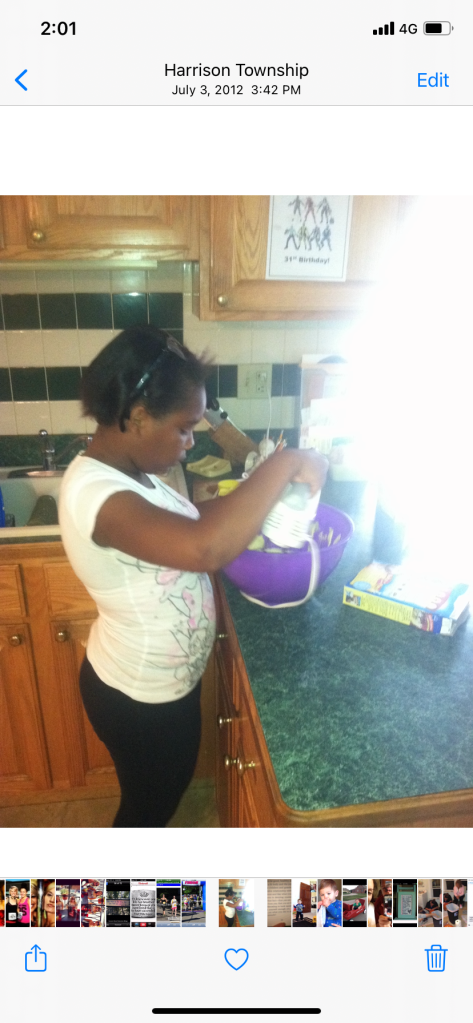
Jordan, in Mary Ellen’s kitchen, making her birthday cake.

What Privilege Looks Like Up Close

The school I teach at is unique because there is great disparity amongst the socioeconomic status of the students. Some live in massive estate-style homes on manmade lakes while others qualify for free and reduced lunch. But they all spend their days together.

And now, 18 years in to a career that has been part of me since the day I entered this world, I realize that it is unfair and unrealistic to expect that they will all function similarly within the confines of a classroom.

I now understand wholeheartedly and unapologetically that some of the students need me to teach them how to add decimals and others need me to simply be the person who shows up for them every day and sets boundaries.

Ellie and I came from families who had the resources to send us to preschool and go on vacation and buy us pretty backpacks and matching folders. Our families made it easier for us to have our work featured on the Blue Ribbon Board and to know that, when the teacher is teaching, it’s not time to go in the bathroom and give the class stuffed coyote a tail trim.

I watched Ellie interact with Jordan that year, how she always asked her if she wanted to be in her group, how she helped her keep her materials organized, how she stood near her in line and politely reminded her to stop talking when we were leaving for an assembly.

It was like Ellie somehow knew to teach Jordan how to play the game of school, of middle class norms, but with so much grace and compassion, because Jordan regularly named Ellie as one of her best friends.

I had never witnessed another child selflessly extend so much grace to a peer like that before. And I made a mental note that when I became a mother one day, I had to make sure that my own daughter would be the Ellie and take Jordan under her wing.

I didn’t care if my daughter was valedictorian.

I wanted her to be the girl in her damn class who helps Jordan organize her desk when she’s got fourteen missing assignments and can’t find a pencil to begin completing the first one.

Because when that happened—when one beautiful human being extended her hand to another beautiful human being—it was like God Himself was on the class roster, along with Carl Coyote, Jordan, and Ellie.

You Owe This World

At that conference, I asked Ellie’s mom to tell me how she raised a daughter who was only ten years old but who knew how to find the Jordan in the room.

Ellie’s mom looked at me and, without hesitation, said, “Sarah, I have tried to teach my children that the world owes them nothing. They owe the world.”

I Can’t Make Crafts or Coordinate Holiday Garb

God made me Jordan’s teacher for a reason. And he put Ellie in that class as well. He wanted me to see how much I have been given and how much He expects of me.

Maeve and Maverick Meyer do not have a mother who knows how to make crafts.

They do not have a mother who is diligent about coordinating family Halloween costumes or matching Christmas pajamas.

I haven’t printed any of the four zillion professional photos I’ve had taken of them over the last several years.

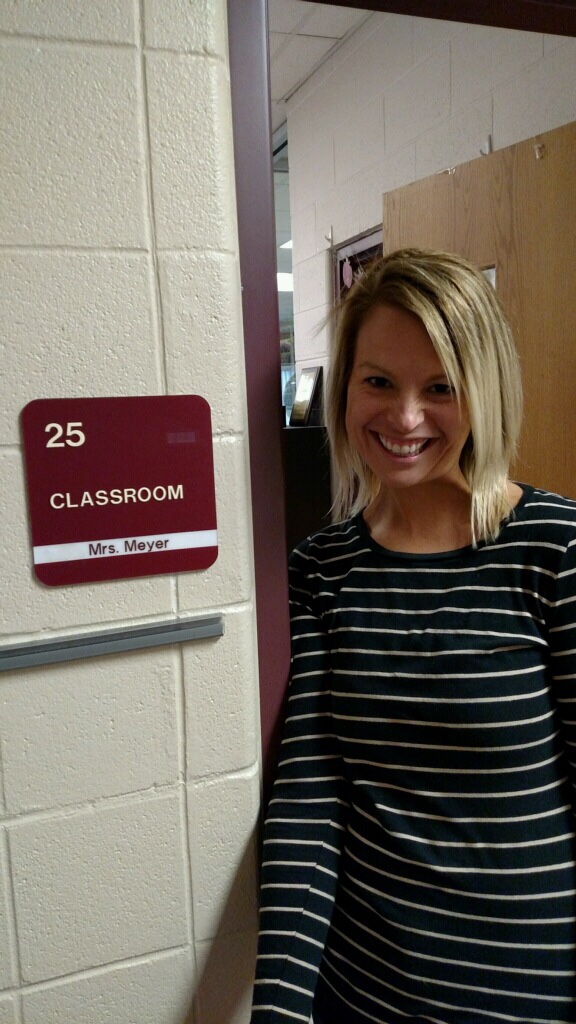
But they have a mother who has been forever changed by what she saw in Room 25 ten years ago.

And they will always be expected to go after the Jordans, to give this world what they have been given.

Am I Keeping Up? Am I Good Enough?

I was my parents’ first child, born in 1981.

My mom didn’t have her eyebrows tinted for our first hospital photos together.

In the photos of my birth, my mom is wearing the provided hospital gown and I am wearing the provided hospital blanket.

This was pre-Etsy, pre-mama/daughter-matching-floral mama-kimono, baby-turban days.

I’m pretty sure my dad didn’t buy her a push present because I don’t think those existed at the time. (I also know my mom, and I know she would have said something like, “Let’s get a new washer instead of getting me a push present” whereas, I’m like, “Let’s get me a necklace and wash our clothes out back in the water which collects under our porch.”)

Multi-hundred dollar leather diaper bags which also hold laptops hadn’t hit the scene yet.

Their wedding rings weren’t strategically placed on my tiny toes for show, I didn’t have a onesie with a perfectly-placed Cricut-cut phrase which read, “I’m New Here,” and they didn’t pay a grand for a Snoo to mimic womb sounds and feels when I slept.

It all just seems so much simpler.

Imagine Doug Zwirner being like, “Take that again. I don’t like the way my mustache looks in that one.”

They had a baby and they were able to capture only 24 pictures of her per roll of film.

They “posted” the photos in those vintage albums with the stinky glue on back and plastic sheet on top.

And, they only “shared” them with relatives.

Their co-workers, distant acquaintances, and friends from high school didn’t have the ability to see professionally edited photos or family selfies from the birth.

Keeping Up

One of my friends posted on Facebook the other day that she was going to take the leap and organize her son’s playroom.

I instantly panicked.

“Shit,” I thought to myself.

“I haven’t professionally organized our ‘playroom” (living room) yet. I need to do that too, now. Bins. I need bins. I’ve got to get more bins.”

There’s something about those wall organizers with the embroidered chevron containers which set an unrealistic expectation for me.

Like, if I were a really good mom who cared, my kids would have a playroom which was perfectly organized and resembled a kindergarten classroom.

If I were like the other moms, I would have special non-BPA containers for puppets, musical instruments, and MagnaTiles and Maeve and Maverick would hit developmental milestones effortlessly because of my IKEA Trofast system.

On the contrary, Maeve and I played with kinetic sand in the entryway of our house the other day because we have limited open space. Mark laughed at the fact that I’m every Type A’s worst enemy and asked me why I’d bring out sand at 7 p.m. on a Sunday night?

“Because I need something to entertain her so she doesn’t eat my soul alive before bedtime,” I replied.

Come to find out, kinetic sand makes wooden floors extraordinarily slippery.

We’ve all been falling on our asses when we go upstairs because of it.

Precisely why my mom would never have brought out kinetic sand on wooden floors.

Organized playrooms, organic food, swimming lessons, baby sign language, farm animals at birthday parties, personalized lunch boxes?

We’re driving ourselves crazy trying to keep up.

Sensory Bins

I constantly compare myself to the mothers I see on social media and unconsciously expect that I should do everything they’re doing.

A case in point?

Sensory bins.

Sweet, sweet Jesus.

I feel like sensory bins are our generation’s apology to our kids that they can’t play outside unsupervised because we’re terrified they’ll be kidnapped.

International sensory bin, so obviously she’ll be Ivy League.
This is Maeve, playing in a bin of dirty corn at a country fair we went to in Montreal when we visited Mark’s family.

So, as a peace offering, we make these giant Rubbermaid bins full of rice and beans that our mothers never would have made because they wouldn’t have wasted rice and beans and we spend Saturdays dying rice rainbow colors and we say to our children, “Look at Mama, Babe! Weeee! You scoop the rice!”

We hand our toddlers measuring cups and spatulas and and we tell ourselves that sensory bins encourage their fine motor skills and that we’re worthy and deserving because we put so much effort into their play.

My sweet Kansas nephew, Jack, trashing a sensory bin my sister made for him. In the background is a vintage Barney school she found on Mercari for his birthday and paid top dollar for.
It’s good to be a baby in 2020.

My mom used to clean the basement where our toys were housed by using a push broom to pile all the shit on the floor up.

“The floor better be clean when I come back down here, or I’m getting rid of all of it,” she’d warn us. And then she’d go upstairs and place a call to her sister on the landline and the two of them would chat and cackle before their husbands arrived home for the day.

And she didn’t feel guilty. I know this because she has told me this for the entirety of my adult life.

To this day, she’ll stand by every parenting move she ever made.

Am I Good Enough?

There is positively no way my parents were worrying about keeping up and whether or not they were going to ruin us.

We ate that nacho cheese from a can and frequented the Hostess factory outlet on Groesbeck for lunchbox fillers.

No one was spending weeknights filling Bento boxes with sunflower seeds and black beans.

We were served bread and butter at every dinner as a side.

Country Pride white bread, that is.

And no one was spreading avocado or chia seeds on it.

Every damn time I make Maeve a meal, I’m wondering how I can make the plate more colorful, how I can position the chickpeas so they seem more appealing to her.

Last summer, she ate handfuls of sand while we were at the beach.

And, for crying out loud, my dad smoked in the family minivan while we were all in it. I once asked to roll down the window and he replied, “It’s too cold outside. You’ll be fine.”

I’m certainly not endorsing smoking in vans amongst the young, but my point is that he loved us and he did the best he could.

And that was enough.

Because he’s been gone for 17 years and I know, undoubtedly, that he loved me so hard it hurt his heart.

If You’re Thinking About It, You’re Doing It Right

In my mom’s group circle this Thursday night, we took turns reassuring each other that we’re good enough.

That we’re really good, actually.

It’s easy for us to see it in each other.

It’s not as easy to reassure ourselves.

I look at my friend, Lyndsey, and I tell myself that her kids are luckier than mine because she can breast feed and I can’t, because she works part time and I work full time, because she knows which eyeliner to use and I have to ask her.

Meanwhile, she shared that she’s worrying about whether or not she’s doing a good enough job teaching her two year old and seven month old the importance of a healthy lifestyle.

She is an amazing mother.

And yet, she questions, like I do.

We laughed at Thursday’s session when we acknowledged the ridiculousness of some of our worries.

We howled, thinking of Lyndsey, running around her house in a tracksuit while lifting weights after working all day, so her babies know she prioritizes health.

Of course she prioritizes health.

Of course she loves her babies.

Of course she’s a good mother.

Our group leader, who I’m really digging, looked at all of us after we’d discussed daycare woes, self-doubt, and relevant Daniel Tiger songs and said, “I promise all of you. If you’re even thinking about it, you’re doing it right.”

Let me say that again.

“If you’re even thinking about it, you’re doing it right.”

It Takes A Village —And The Villagers May Not Be Who You Think They Are

I attended a Mother Honestly event at The Dailey Method—Birmingham awhile back which featured a motivational speaker named Toni Jones.

I remember walking in to the event the same way I walked in to the end of the year dance at Middle School South when I was 11—-hovering near the perimeter, half-wanting to know what this was all about, half- wanting to evaporate.

The women attending the event all seemed so polished.

OOne woman was wearing a hat.

A hat.

Like, the kind of hat those beautiful people strolling beaches on Kohl’s picture frame display photos wear with wide brims and a thin leather bow.

“How in the fresh hell is that woman poised enough to be wearing a hat indoors while I’m sniffing myself to ensure that I don’t stink upon entry?” I questioned myself as I approached the sample smoothie table.

“Her baby must be sleeping through the night,” I reassured myself. “That’s how she has enough time to coordinate.”

I was all kinds of awkward and still trying to figure out how to somehow not make it obvious that I was wearing an Old Navy sundress in the midst of a fashion sea.

Motivational speaker Toni Jones was wearing a Grecian-blue jumpsuit and the most fantastic shade of lipstick I had ever witnessed when I walked into the studio room.

I skeptically waited to hear what she had to say.

There was a woman in the audience who was days from delivering her child. She naively raised her hand and asked, “What is the best advice you can give me before I deliver?”

Toni Jones then legitimately gave this woman the best piece of advice someone can give mothers.

Or give anyone, as far as I’m concerned.

She set this mother up for success before her baby even arrived.

“You need to know who your village is,” Toni told this mama-to-be. “And, don’t be surprised if it doesn’t end up being some of the people you think it will.”

This is a picture from that day. I’m in the back row, fifth from the right, wearing a green kimono to pretend I’m fancy. Toni Jones is on the bottom, fourth from the right. She just is fancy. She didn’t have to pretend.

Your Village Will Come—You’ve Got To Build It

My daughter, Maeve, had just turned one that summer. I sat on the floor of the Dailey Method tugging at my Spanx knockoffs and smoothing my sundress while I inhaled and exhaled that advice.

My village wasn’t at all who I predicted it would and would not be.

For some reason, I thought that me having a baby girl would instantly iron the wrinkles in the relationship between my mother and I.

I thought me becoming a mother would make us have more in common.

And in a few ways, it did. But in a lot of other ways, it did not.

Pre-Maeve, I envisioned my mom in my kitchen, stirring a bowl of brownie batter while I stood next to her and breastfed my daughter. We had just gotten home from a Target shopping trip where we took turns pushing the stroller and peeking under a pink muslin blanket to admire my baby girl.

In reality, none of that happened. My mom always claims to “not really need much” from Target, breastfeeding was hellish for me and it wasn’t for my mother, and, we’ve never baked brownies together.

In all actuality, we’ve never once baked anything together.

So why I would have expected that things would change once I had a baby, I’m still not exactly sure.

Maybe because I wanted my mother to mother me in the 90’s-sitcom-mom-way I saw some women doing.

Maybe because I was so desperate to have someone tell me it would all be okay, that I would eventually find some kind of rhythm, that she struggled, too, in her first days and weeks of being a mother.

But that isn’t the kind of relationship my mother and I share.

So, it took me some time, some therapy, and some distance to stop seeking certain things from the village I desperately kept trying to construct.

I have four sisters who I tried to give village memberships to, and most of them weren’t looking to be card-carrying members.

Naively and selfishly, pre-baby, I assumed they’d reprioritize their own lives once my daughter arrived and be available at the drop of an indoor hat to help me when I needed it.

(I’m also realizing that, unbeknownst to me, many of my unrealistic expectations included malls because I regularly pictured my sisters and I pushing my baby briskly in a stroller around Somerset Collection while we chatted.)

I had never gone to Somerset with any of them prior to having my daughter.

Two years later, I still have not set foot in Somerset at the same time as any of my sisters.

They have their own lives.

They’re not necessarily looking to align theirs consistently with mine. And that’s been a horse-tranquilizer-sized pill to swallow.

It’s an ego blow.

It’s a reality check.

It’s a realization that maybe things aren’t always the way you pretended they were and there’s a baby now, shining light on the truth.

Eventually, my village slowly began to grow itself.

The arrival of my second child was different from my first because my village was in tact.

Eyebrow Waxes and Grenades

I joined a moms’ group at Honey For Moms in Ferndale, only six weeks after having Maeve. This motherhood mecca has been the classroom in which I have learned lessons and formed friendships.

There, I met fifteen women who had babies the same age as Maeve. We share a daily text thread where we discuss everything from eyebrow waxes and diaper rashes to punching our husbands and throwing grenades in the bathrooms in which they hide from us and their children.

The Honey Mamas text thread is silenced on my text notifications because it can and does go off anytime and always. Someone is always up feeding a baby at three a.m. and someone is always there to commiserate when I text, “Why isn’t Maeve napping anymore?”

Marcia, Marcia, Marcia

My friend, Marcia, is a retired teacher who texts me regularly during the school day, reminding me to breathe, to “take five” and sit down at my desk, to remember that I am valuable, too. She remembers what it was like being a working, teaching mama of babies and she isn’t of the mindset “I struggled, so I’ll stand back and watch you struggle now, too.”

Marcia told me about how she had to go back to work after only six weeks postpartum in the 90’s, how she clearly still remembers leaving her young babies at daycare and not sleeping through the night.

She sees me and she’s holding space for me.

Cristina Morales

Cristina Morales, a physical therapist I worked with after holding 20 pound Maverick all day and night made my arms go numb, was the first person to touch my c-section scar.

I couldn’t bring myself to do it.

She asked me one week if I had begun to massage it yet, if I had begun to guide its healing.

It was so metaphorical to me.

I couldn’t. I couldn’t do it by myself, I told her. I already felt so isolated in my motherhood that I had to hand it over to her. Massaging the skin on that scar meant independently navigating the next voyage and accepting that my body had been permanently changed.

I needed someone to comfort me, to align with me.

People are so quick to ask how the baby is doing.

They’re not as quick to ask how the mama who brought him earthside is doing.

Cristina came to my house throughout September and October and she held Maverick when he cried so I could perform the healing exercises she taught me. She massaged my hands so I could begin to hold my son without pain again. She always listened to me sincerely and she stepped in to the emotions which came to the surface each week.

And, one week, I finally allowed her to gently manipulate my c-section scar as tears rolled from the ducts of my eyes. It was as if she steered the boat at that moment so my tired hands could have a break.

Sarah

I have a friend at work named Sarah whom I mention often.

It may seem to be a bit much for people who see us together so frequently.

But I lean on her because leaning on her guarantees that I will not fall down. And, I’ve learned that when you’re a mom, you’re everyone else’s guarantee.

When I lean on Sarah, Sarah is holding not only me, but Maeve and Maverick as well.

We met in 2007, when I came to Carkenord for a new opportunity. I was 26 years old, had the Kate Gosselin haircut, and spent at least 50% of my take-home pay on clothes, makeup, and fitness.

At that time, Sarah seemed so grown up. She had a young son, mentioned vacationing at her family’s condo in Florida, and knew about the intricacies of our health insurance.

Our personal lives have changed tremendously since then.

My hair is shoulder-length, 50% of my income goes to childcare, and I know about my health insurance policy now.

Sarah’s son is in his final year of middle school, she no longer has to rush out to pick him up from childcare, and she is sleeping through the night.

Our friendship has evolved.

She has a rocking chair in her classroom that was purchased with district money, most likely for read alouds and such.

I sit in that chair more than she does.

I sit in that chair every morning while she sits at her desk chair and we debrief. We discuss our extended families and how we want to live vicariously through her cousin, Ted, who is living in Düsseldorf and partying on the regular. Last winter, during my second pregnancy, we ate those massive cinnamon rolls from Panera on Fridays while laughing that we had made it through another week of raising kids who aren’t ours.

Nothing is off limits with Sarah.

I can ask her about finances, periods, marriages, and how she organizes her computer files. She drove my children and I to newborn photos in Auburn Hills when Mark threw his back out one week after my delivery.

Here, Sarah is entertaining my two year old while my newborn son is photographed. I asked her to stay in the studio with him and just act as me while I entertained Maeve in the lobby.
When I called her the night before to drive us, she said, “I’d be honored to. We can take as long as you need.”

And she never judges me. Ever.

This week, I asked her to fix my document projector.

She calmly came into my room, assessed the situation, plugged it in, and returned to her own room.

It was Thursday, some of our students were getting their taxpayer dollars worth, and we both had had it.

I crack under pressure before she does. We both know this. And she s never throws it in my face.

Sarah is an integral part of my village.

We laugh that we want our own podcast and we’ll have one as soon as we can figure out how to make it our full-time job.

Your Village Zip Code

If you haven’t yet, begin to find your village.

And don’t be surprised if who you think should be in the village zip code isn’t.

It’s okay. The card-carrying members will never leave you to feel alone.